In brief
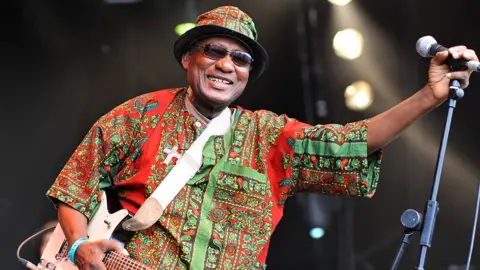
Ebo Taylor, the renowned Ghanaian musician, passed away at the age of 90, leaving a rich legacy that influenced the highlife genre and inspired countless artists around the globe. Known for his unique guitar style and innovative fusion of sounds, Taylor's music resonated with audiences far beyond Ghana. His contributions spanned several decades, during which he collaborated with many artists and helped foster a musical exchange that shaped genres like Afrobeat. As tributes pour in, it's evident that Taylor's impact on music will be cherished for generations to come.
Ebo Taylor, the Ghanaian guitarist, composer and band leader whose work helped define the highlife genre and influenced generations of African musicians, has died at the age of 90, his family has announced. Born Deroy Taylor in the city of Cape Coast in 1936, he rose to prominence during the late 1950s and early 1960s as highlife became Ghana's dominant musical form. He played with the era's leading bands, including the Stargazers and the Broadway Dance Band, and gained a reputation for a distinctive guitar style and detailed arrangements.Over a six-decade career, he fused Ghanaian rhythms with jazz, funk, soul and early Afrobeat and went on to inspire musicians beyond the continent. In the last 25 years of his life, his music was rediscovered by a global audience with the release of tracks like Love & Death – his reflection on relationships and mortality – driving a fresh host of fans.A formative period in Taylor's musical development came in the early 1960s when he travelled to London to study music, where he worked alongside other African musicians, including Nigerian artist Fela Kuti. Their collaboration is now viewed as part of a wider exchange of ideas that helped shape Afrobeat, a genre that Fela would later bring to international attention. On his return to Ghana, Taylor became a sought-after band leader, arranger and producer, working with some of the country's most respected artists. Reflecting on his own influences, he once noted, with the advent of James Brown and funk music, there was the opportunity to develop highlife music.Towards the end of the last century and the beginning of this, Taylor spent more time teaching music at the University of Ghana. His new-found popularity in his 70s meant that he started gigging in the US and Europe, and his recordings began to attract attention well into later life. Notable albums such as Love & Death, Appia Kwa Bridge and Yen Ara reinforced his standing as one of Ghana's most important musical figures.Taylor's influence extended far beyond highlife. His work has been sampled in songs by artists like Usher, The Black Eyed Peas, Kelly Rowland, and Jidenna, introducing his music to new listeners worldwide. As Panji Anoff, a top Ghanaian music producer, described him, he was Uncle Ebo who treated everyone as an equal, inspiring many with his creativity. Across Ghana and the wider African diaspora, Taylor is recognized as a foundational figure whose work helped bridge traditional and modern sounds. He leaves behind a body of music that continues to inform contemporary styles and remains central to the story of African popular music.