In brief
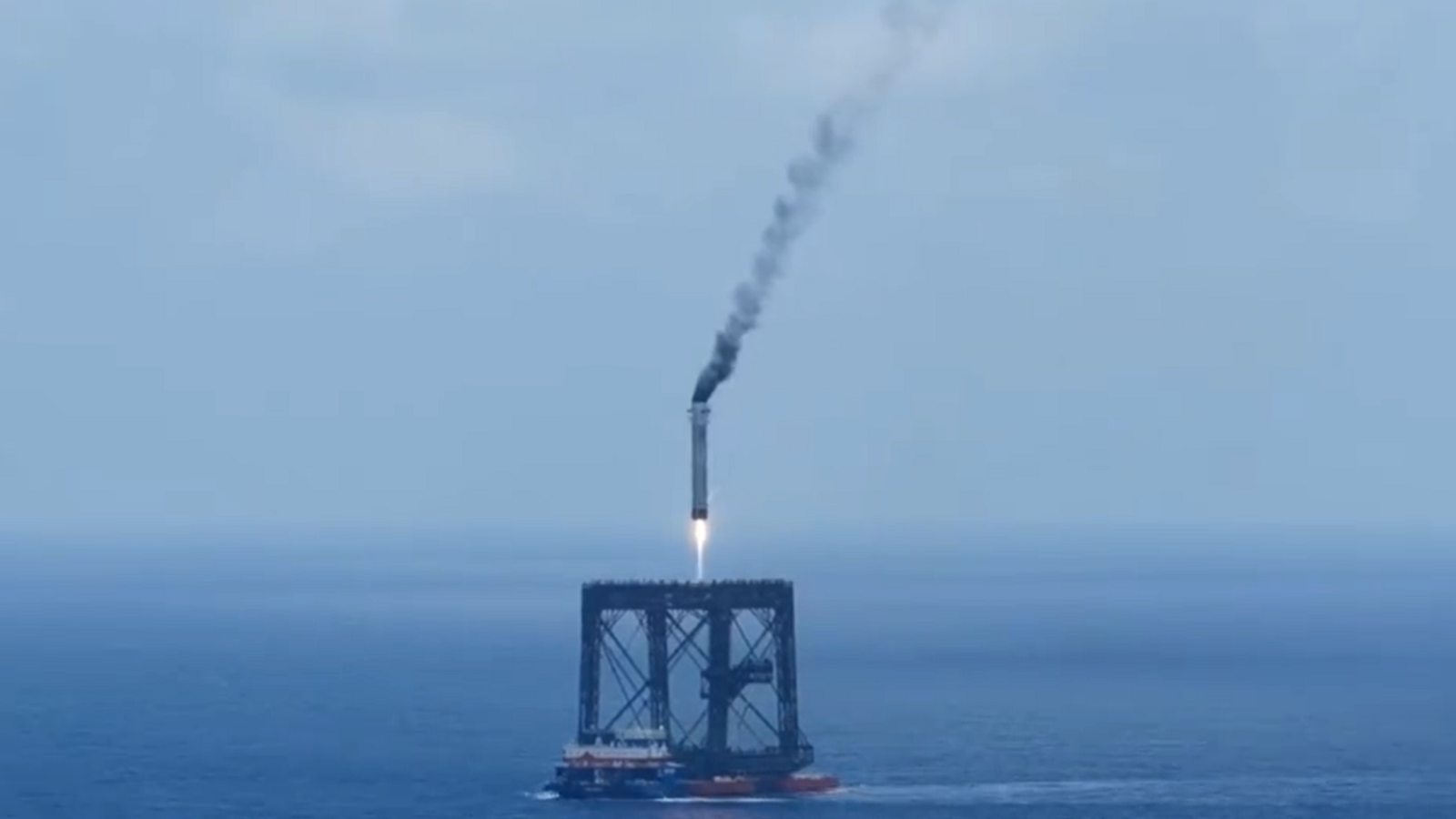
China’s Long March 10B rocket successfully returned to a floating platform after launch, marking the country’s first reusable rocket landing. The event is a blow to U.S. dominance in reusable launch tech and could reduce satellite launch costs. The boost, carrying 16 tonnes to orbit, mirrors SpaceX’s Falcon 9 but lands via net‑hook system instead of autonomous grid. Shares in Chinese space firms surged after the news, and the move could signal China’s rise in space finance.
China lands reusable rocket for first time
China’s Long March 10B booster just touched down on a floating platform, proving that the country can now return rockets just like SpaceX and Blue Origin.
The rocket lifted off from Hainan Earth‑science site at 12:15 local time on Friday. Six minutes after its upper stage separation it spun back toward Earth and was caught by a hook attached to a net on the platform.
This move shows China is catching up with America’s reusable‑rocket pioneers. SpaceX first landed a Falcon 9 in 2015, and Blue Origin did the same with New Glenn in 2025. Reusable boosters lower the price of sending satellites into space.
The Long March 10B can launch up to 16 tonnes to low‑Earth orbit, a cargo size near that of SpaceX’s Falcon 9. Unlike SpaceX, it will not land on a ground pad or drone ship; it uses a landing hook system instead.
Investors reacted quickly: shares in China Spacesat and China Satellite Communications jumped 10 %, the top jump allowed by China’s market rules.
Why it matters for future space travel.
- Reusable rockets cut launch cost and time.
- More affordable satellite fleets mean cheaper connectivity worldwide.
- China’s progress could spark a new era of competitive space access.
Watch for a quick 60‑second video recap on SnapScope’s channel. Stay tuned for more space news in the days ahead.