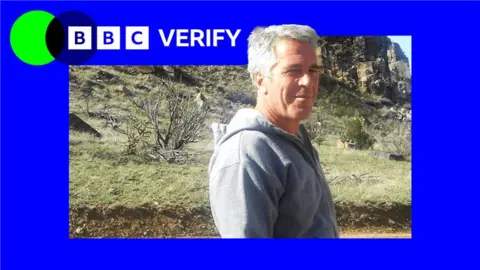
Unredacted images and videos showing nudity released in the Epstein files have been online for days despite US officials being warned about failures in redaction, which lawyers say has caused victims 'irreparable' harm. The files seen by BBC Verify are among thousands of documents lawyers say they have discovered that contain identifying information about dozens of Epstein's victims. Victim groups first spoke out about the issue at the weekend when the New York Times reported nearly 40 separate images had been published as part of the Epstein files on Friday.
On Tuesday, a New York judge said the Department of Justice (DoJ) had agreed to quickly fix the issue after victims called for the website to be shut down until names and images could be properly redacted. The DoJ removed thousands of documents from its website, stating that the files had been uploaded due to 'technical or human error'. The department said it was continuing to examine new requests, as well as checking whether there were any other documents that might need further redaction.
BBC Verify found independently that a number of images of identifiable people were still online on Wednesday, despite the US government stating it was tackling the issue of incomplete redactions the previous day. We have approached the DoJ for comment and supplied the names of unredacted files. 'The damage done is irreparable,' Brad Edwards, a lawyer representing the victims, said in a statement.
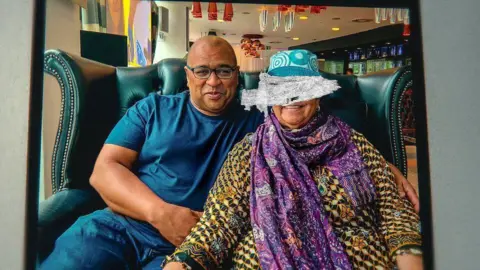
Victims have expressed outrage, with four of the images identified by BBC Verify showing partially clothed young females with their faces and bodies unredacted. These images were found during a general search of millions of files released for evidence of Epstein's interactions with public figures. Photos of other people appear to have been redacted in some documents but left unredacted elsewhere, suggesting inconsistencies in the redaction process.
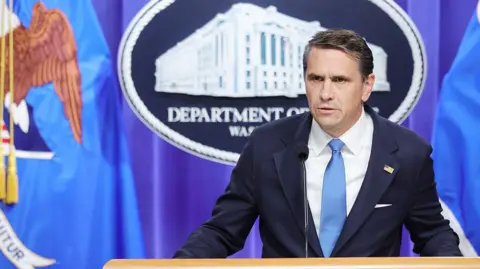
The DoJ officials had been tasked with redacting all sexually explicit photos or any information which could identify victims before the latest tranche of Epstein files was due to be published. Ahead of the deadline, deputy Attorney General Todd Blanche emphasized the importance of protecting victims' identities. However, despite these claims, it has been reported that many victims' identities are still exposed through various documents.
Lawyers for Epstein's victims have heavily criticized the DoJ for its failure to adequately protect hundreds of women identified in the files. 'We are getting constant calls from victims because their names – despite them never coming forward, being completely unknown to the public – have all just been released for public consumption,' Brad Edwards stated. He condemned the situation, noting that it involves 'literally thousands of mistakes.'
On Tuesday, a New York judge said the Department of Justice (DoJ) had agreed to quickly fix the issue after victims called for the website to be shut down until names and images could be properly redacted. The DoJ removed thousands of documents from its website, stating that the files had been uploaded due to 'technical or human error'. The department said it was continuing to examine new requests, as well as checking whether there were any other documents that might need further redaction.
BBC Verify found independently that a number of images of identifiable people were still online on Wednesday, despite the US government stating it was tackling the issue of incomplete redactions the previous day. We have approached the DoJ for comment and supplied the names of unredacted files. 'The damage done is irreparable,' Brad Edwards, a lawyer representing the victims, said in a statement.
Victims have expressed outrage, with four of the images identified by BBC Verify showing partially clothed young females with their faces and bodies unredacted. These images were found during a general search of millions of files released for evidence of Epstein's interactions with public figures. Photos of other people appear to have been redacted in some documents but left unredacted elsewhere, suggesting inconsistencies in the redaction process.
The DoJ officials had been tasked with redacting all sexually explicit photos or any information which could identify victims before the latest tranche of Epstein files was due to be published. Ahead of the deadline, deputy Attorney General Todd Blanche emphasized the importance of protecting victims' identities. However, despite these claims, it has been reported that many victims' identities are still exposed through various documents.
Lawyers for Epstein's victims have heavily criticized the DoJ for its failure to adequately protect hundreds of women identified in the files. 'We are getting constant calls from victims because their names – despite them never coming forward, being completely unknown to the public – have all just been released for public consumption,' Brad Edwards stated. He condemned the situation, noting that it involves 'literally thousands of mistakes.'