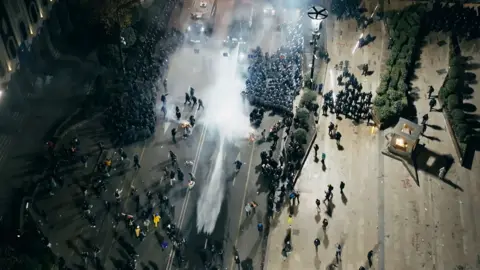
Georgia's authorities used a World War One-era chemical weapon to quell anti-government protesters last year, evidence gathered by the BBC suggests.
You could feel [the water] burning, one of the protesters said of water cannon turned on him and others on the streets of the capital Tbilisi. A sensation, he said, which could not immediately be washed off.
Demonstrators against the Georgian government's suspension of its European Union accession bid have complained of other symptoms too - shortness of breath, coughing, and vomiting that lasted for weeks.
The BBC has spoken to chemical weapons experts, whistleblowers from Georgia's riot police, and doctors, all suggesting the use of an agent known as camite. This chemical was used by the French military against Germany during World War One and is believed to have been taken out of circulation due to its harmful effects.
The local police responded to the protests with various riot-control measures including the use of water cannon, pepper spray, and CS gas. Those affected, including Dr. Konstantine Chakhunashvili, reported suffering from severe symptoms, with many participants in Dr. Chakhunashvili's survey indicating ongoing health issues.
Experts suggest that deploying camite could violate international law, as it has long-lasting effects that exceed typical crowd-control measures. A UN Special Rapporteur on Torture expressed concern, stating that populations should not be subjected to harmful experiments.
The Georgian government dismissed the BBC's findings, characterizing them as absurd while asserting their law enforcement's actions were within legal bounds against alleged criminal activities.