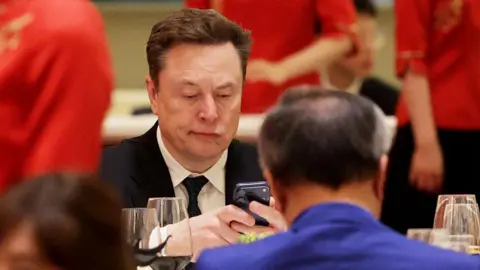
Elon Musk's platform X has limited image editing with its AI tool Grok to paying users, after it came under fire for allowing people to make sexualized deepfakes.
There has been a significant backlash after the chatbot honored requests from users to digitally alter images of other people by undressing them without their consent.
But Grok is now telling people asking it to make such material that only paid subscribers would be able to do so - meaning their name and payment information must be on file.
The BBC has approached X for comment.
Those who do not subscribe can still use Grok to edit images on its separate app and website.
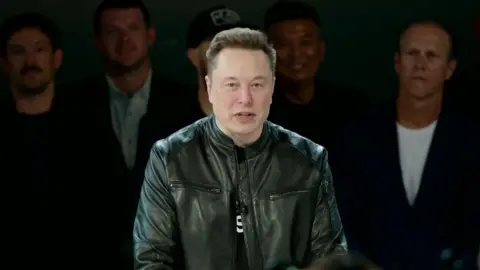
Musk has thrown his toys out of the pram in protest at being held to account for the tsunami of abuse, said Professor Clare McGlynn, an expert in the legal regulation of pornography, sexual violence, and online abuse.
Instead of taking the responsible steps to ensure Grok could not be used for abusive purposes, it has withdrawn access for the vast majority of users.
And Hannah Swirsky, head of policy at the Internet Watch Foundation, said it does not undo the harm which has been done.
We do not believe it is good enough to simply limit access to a tool which should never have had the capacity to create the kind of imagery we have seen in recent days, she said.
The charity previously said its analysts had discovered criminal imagery of girls aged between 11 and 13 which appeared to have been created using Grok.
Sitting and waiting for unsafe products to be abused before taking action is unacceptable, Swirsky said.
It comes after the government urged regulator Ofcom to use all its powers - up to and including an effective ban - against X over concerns about unlawful AI images created on the site.
Addressing concerns that sexualized images of adults and children had been generated by Grok, Prime Minister Sir Keir Starmer said it was disgraceful and disgusting.
He said Ofcom had the government's full support to act on the content.
It's unlawful. We're not going to tolerate it. I've asked for all options to be on the table, he said in an interview with Greatest Hits Radio.
Ofcom's powers under the Online Safety Act include being able to seek a court order to prevent third parties from helping the Elon Musk-owned platform raise money or be accessed in the UK.
The BBC has approached the regulator for comment.
Grok is a free tool which users can tag directly in posts or replies under other users' posts to ask it for a particular response.
But the feature has also allowed people to request it to edit images - and ask it to digitally strip people of most of their clothing.
Grok has fulfilled many user requests asking it to edit images of women to show them in bikinis or little clothing - something those subject to such requests have told the BBC left them feeling humiliated and dehumanized.
However, as of Friday morning, Grok has told users asking it to alter images uploaded to X that image generation and editing are currently limited to paying subscribers.
It adds users can subscribe to unlock these features.
Some posts on the platform seen by BBC News suggest only those with a blue tick verified mark - exclusive to X's paid subscriber tier - were able to successfully request image edits to Grok.
Dr. Daisy Dixon, a female X user who said she had seen an increase in people using Grok to undress her, welcomed the change but said it felt like a sticking plaster.
Grok needs to be totally redesigned and have built-in ethical guardrails to prevent this from ever happening again, she told the BBC.
Professor McGlynn said X's move echoed its approach to pornographic Taylor Swift deepfakes on the platform last year - where it blocked searches for sexualized material generated of the pop star using a Grok AI video feature.
He is doing this to stoke free speech arguments, she added.
He will claim regulation is stifling people's use of this technology. But, all the regulation requires is that he takes necessary precautions to reduce harm.