In brief
In a press conference, Mayor Zohran Mamdani announced the release of 170,000 pages of long‑forgotten records about Manhattan’s air quality after 9/11. The documents show that city officials were aware of toxic air but reassured the public that the environment was safe. The release came after a lawsuit by 9/11 Health Watch demanded the documents and followed the discovery of 68 boxes of files last year. The city will post thousands of pages online this anniversary, committing over $34m to a transparent archive.
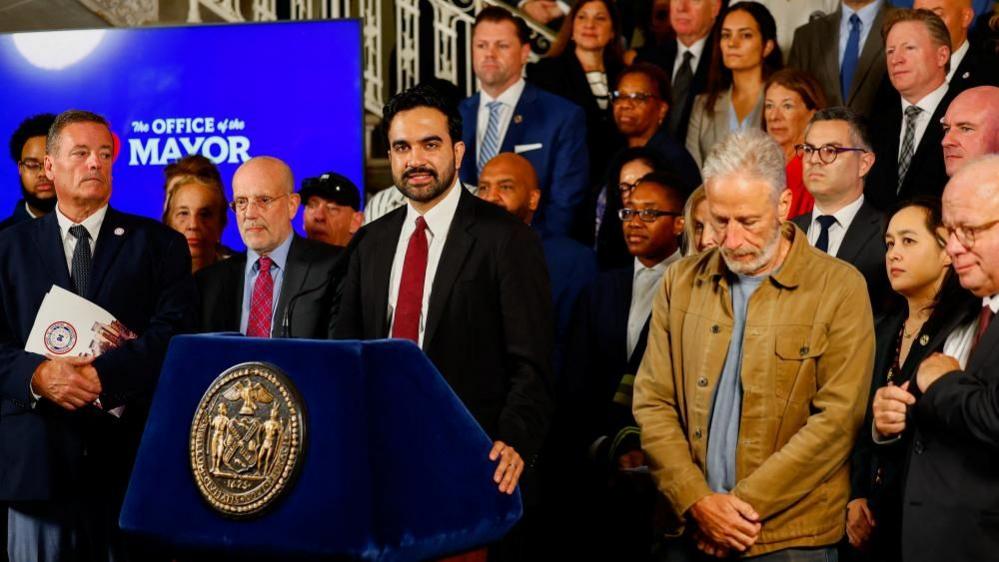
NYC has released previously unseen documents raising concerns about air quality in Manhattan in the aftermath of the 9/11 attacks, Mayor Zohran Mamdani announced at a press conference.
Documents from 25 years ago suggest that officials were worried about toxic air after the twin towers collapsed, while the public was reassured that the environment at Ground Zero was safe.
“People got sick because the leaders they trusted lied and told them they were safe to breathe in toxic air,” Mamdani said, standing beside television host and 9/11 survivor Jon Stewart.
The release resolves a lawsuit brought by advocacy group 9/11 Health Watch, which sued the city for the records, and follows the discovery of 68 boxes of these documents last year. City officials had previously said they did not have them.
Thousands of people have experienced health effects, such as cancer, after breathing hazardous contaminants from the building collapses.
Mamdani said the city will release hundreds of thousands of pages of air‑quality reports through an online portal, timed with the 25th anniversary of the attacks, and will spend more than $34m on the effort.
The documents show that asbestos was found “nearly everywhere” tested. More documents will be released over the next year.
Jon Stewart highlighted that the city didn’t recognize the air was toxic until October 2001. He sarcastically remarked that the information was buried for 25 years.
The documents include an October 2001 filing known as the "Harding Memo," warning Deputy Mayor Robert Harding that the city could face up to 35,000 legal claims for its response to the attacks, mentioning that health advisories could “cause people to return to the area too soon, exposing them to toxic air.”
Days after the attack, the city and the US Environmental Protection Agency declared air near the Twin Towers safe, although research suggests people breathed in toxic chemicals. Christine Todd Whitman, then head of the EPA, later apologized for the declaration.
Illnesses related to dust and smoke from the collapse have claimed twice as many lives as the attacks themselves.
Elizabeth Cascio, a former FDNY EMT, described suffering sinus issues and headaches after responding to the attacks, noting that the air felt toxic and people felt a need to hold their breath as they reached the site.