In brief
In the wake of Beijing's crackdown on Hong Kong's pro-democracy movement, memories of a defiant past linger. Former activists reflect on the changes they’ve witnessed in their beloved city, revealing a bittersweet mixture of nostalgia, loss, and a continuing fight against erasure.
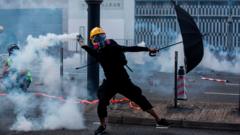
Article Text: Kenneth strolled through the lush expanse of Victoria Park, reminiscing about the vibrant pro-democracy protests that marked Hong Kong's last decade. Once a hub of resistance, the park was where he first tasted activism, attending vigils for the Tiananmen massacre as a child. Today, it feels eerily hushed, reflecting the new reality where protests are quashed and many pro-democracy advocates behind bars. A former activist, Kenneth laments the gradual erasure of Hong Kong’s political spirit, noting that while life continues, the character of the city is fading.The city's bustling atmosphere remains the same, with trams navigating its streets and neon lights illuminating the skyline. However, the pervasive presence of mainland Mandarin and Beijing's influences signifies a subtle yet undeniable shift. Although protests drew hundreds of thousands during the last decade, China has tightened its grip, employing the controversial national security law to silence dissent and push many Hongkongers into exile.Political figures from the past, like Joshua Wong and Benny Tai, have become symbols of both hope and loss. As the landscape of democracy in Hong Kong fades, Kenneth reflects on the "normalised state of surveillance" people now live under. Activism has changed from robust protests to cautious appeals against a backdrop of fear. Meanwhile, many former activists adapt to a new reality, creatively preserving the stories of their struggle against authoritarianism, despite the risk of arrest.From afar, exiles like Chan Kin-man in Taiwan grapple with a sense of defeat yet strive to hold onto their history through education and archiving. He remarks on how Hong Kong, once a beacon of liberty, appears more like cities in mainland China, devoid of the freedoms promised in 1997. Yet, for some like Kenneth, hope persists. While he navigates a landscape where he must gauge his expressions carefully, he stands firm in the belief that Hong Kong's spirit is not dead but transformed, existing through the memories of its people.In the UK, Kasumi Law shares her longing for the familiar scenes of her childhood, even as she recognizes the fundamental changes in the city she once called home. Despite her new life in Watford, a sense of loss accompanies her, compounded by the realities of a Hong Kong increasingly dominated by Beijing's narratives. Yet in her heart, she resolves to instill her daughter's identity as a Hongkonger, navigating the complexities of cultural heritage in a new environment while preserving their roots. As the chapter on Hong Kong’s decade of protests closes, its characters – both past and present – seek out ways to keep the spirit of resistance alive, forging identities that resonate with resilience even in silence.