Exactly 31 years ago to the day, two Kenyan pilots, Hussein Mohamed Anshuur and Mohamed Adan, received an unexpected visitor at their office at Wilson Airport near the capital, Nairobi.
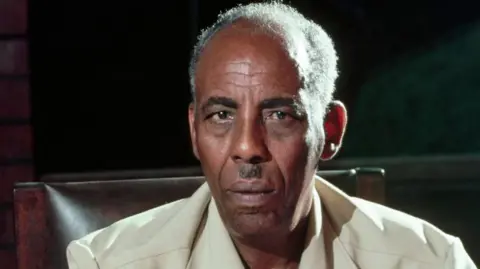
It was a Nigerian diplomat, who drew them into a sensitive and secretive mission to fly the body of Somalia's former ruler Siad Barre back to his homeland for burial following his death in exile in Nigeria at the age of 80.
Anshuur, previously a captain in the Kenyan Air Force, and Adan are partners in Bluebird Aviation, one of Kenya's largest private airlines that they had set up a few years earlier.
Speaking to the media for the first time about the mission, Anshuur told the BBC that the Nigerian diplomat came straight to the point, asking him and Hussein to charter an aircraft and secretly transport the body from Nigeria's main city of Lagos, to Barre's hometown of Garbaharey in southern Somalia for burial, on the other side of Africa, a distance of some 4,300 km (2,700 miles).
Barre had fled Somalia on 28 January 1991 after being overthrown by militia forces, so returning his body was politically fraught, involving multiple governments, fragile regional relations and the risk of a diplomatic fallout.
Anshuur said they were stunned at the request: We knew immediately this wasn't a normal charter.
As they contemplated the mission's risks, which included fear of repercussions from the Kenyan government, Anshuur and Adan debated the implications carefully. The financial offer was lucrative, but the potential diplomatic fallout was a significant concern.
Ultimately, after securing guarantees from the Nigerian government, they embarked on the journey, shrouded in secrecy, using flight manifest deception and navigating through various stops in neighboring countries. Their extraordinary efforts culminated in a successful and discreet return of Siad Barre's body to Somalia for burial, an operation that remains a politically sensitive chapter in the two nations' histories.
Anshuur reflected on the mission, expressing profound awareness of its gravity in a politically complex landscape, stating he would not undertake a similar task today due to advancements in aviation surveillance.