In brief
Recent research conducted at Delhi's Maulana Azad Medical College shows that music can significantly enhance recovery times for patients undergoing surgery. The study, which involved 56 participants, found that those who listened to soothing tunes while under general anesthesia required lower doses of anesthetics and reported smoother recoveries. This suggests that music therapy could play a crucial role in modern surgical practices by improving patient outcomes and wellbeing.
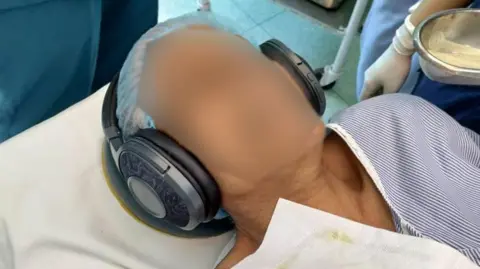
Under the harsh lights of an operating theatre in the Indian capital, Delhi, a woman lies motionless as surgeons prepare to remove her gallbladder. She is under general anaesthesia: unconscious, insensate and rendered completely still by a blend of drugs that induce deep sleep, block memory, blunt pain and temporarily paralyse her muscles. Yet, amid the hum of monitors and the steady rhythm of the surgical team, a gentle stream of flute music plays through the headphones placed over her ears.
Even as the drugs silence much of her brain, its auditory pathway remains partly active. When she wakes up, she will regain consciousness more quickly and clearly because she required lower doses of anaesthetic drugs such as propofol and opioid painkillers than patients who heard no music. That, at least, is what a new peer-reviewed study from Delhi's Maulana Azad Medical College and Lok Nayak Hospital suggests. The research, published in the journal Music and Medicine, offers some of the strongest evidence yet that music played during general anaesthesia can modestly but meaningfully reduce drug requirements and improve recovery.
The study focuses on patients undergoing laparoscopic cholecystectomy, the standard keyhole operation to remove the gallbladder. The procedure is short - usually under an hour - and demands a particularly swift, 'clear-headed' recovery. To understand why the researchers turned to music, it helps to decode the modern practice of anaesthesia.
Achieving that requires a carefully balanced mix of five or six drugs that together keep the patient asleep, block pain, prevent memory of the surgery and relax the muscles. 'Our aim is early discharge after surgery,' says Dr Farah Husain, senior specialist in anaesthesia and certified music therapist for the study. 'Patients need to wake up clear-headed, alert and oriented, and ideally pain-free. With better pain management, the stress response is curtailed.'
The team of researchers designed a study that led to a full 11-month trial of 56 adults, aged roughly 20 to 45, randomly assigned to two groups. All received the same five-drug regimen, but only one group heard music. The results were striking: Patients exposed to music required lower doses of propofol and fentanyl, experienced smoother recoveries, and showed much better control of stress-hormone levels during surgery.
This suggests that even while under anesthesia, the brain remains sensitive to its environment, indicating that music could help in easing patient stress and facilitating quicker recoveries. 'Even when the body is still and the mind asleep, it appears a few gentle notes can help the healing begin,' says Dr Husain.