A woman is currently awaiting execution in Somalia after being convicted of killing a 14-year-old girl in her care. The murder of orphan Saabirin Saylaan in November, and the horrific details that emerged about the circumstances surrounding her death, sparked protests near her home in Galkayo, along with renewed calls for greater child protection. The case touched a deep nerve in a country where child abuse often goes unreported, especially when it occurs inside extended families. For many, Saabirin's death symbolized a broader failure in child protection and the slow implementation of legal safeguards meant to prevent such tragedies. The conviction of 34-year-old Hodan Mohamud Diiriye for murder marked one of the rare instances in Somalia where a court imposed the ultimate penalty for child abuse. Diiriye had denied the charges and her lawyer has filed an appeal against the verdict. Her husband, Abdiaziz Nor, 65, was acquitted of murder but sentenced to one year in prison and fined $500 for negligence.
Saabirin was orphaned when both her parents died within a short period when she was just one year old. Both of her grandmothers had also died so she was looked after by her late mother's aunt, who ensured she got an education and attended a traditional Quranic school. But her life took a devastating turn in September after Saabirin's great-aunt agreed that Diiriye's family, who needed a home help, could take her in. During their investigation, police revealed that in the two months she was living there, the young girl had endured routine physical abuse - she was beaten and tortured.
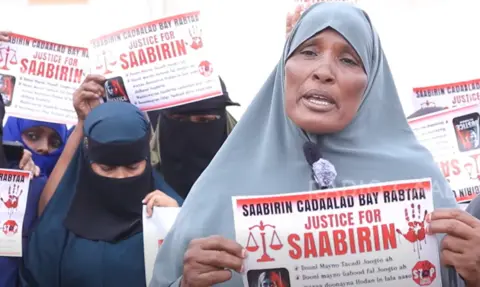
In the aftermath, hundreds of women and young people marched in Galkayo, one of the largest cities in Somalia's semi-autonomous Puntland region, carrying signs reading 'Justice for Saabirin'. They demand accountability and a commitment to protecting children from violence. This tragic event has ignited discussions about systemic abuse and the urgent need for effective child protection laws in Somalia.
Saabirin was orphaned when both her parents died within a short period when she was just one year old. Both of her grandmothers had also died so she was looked after by her late mother's aunt, who ensured she got an education and attended a traditional Quranic school. But her life took a devastating turn in September after Saabirin's great-aunt agreed that Diiriye's family, who needed a home help, could take her in. During their investigation, police revealed that in the two months she was living there, the young girl had endured routine physical abuse - she was beaten and tortured.
In the aftermath, hundreds of women and young people marched in Galkayo, one of the largest cities in Somalia's semi-autonomous Puntland region, carrying signs reading 'Justice for Saabirin'. They demand accountability and a commitment to protecting children from violence. This tragic event has ignited discussions about systemic abuse and the urgent need for effective child protection laws in Somalia.