In brief
The U.S. Central Command confirmed that a merchant tanker, Belma, was hit by Hellfire missiles as it ignored warnings while heading toward Iran’s largest oil export terminal. President Trump re‑introduced a naval blockade of Iranian ports following a series of alleged attacks on commercial vessels. During the blockade period, U.S. forces redirected over 140 vessels and disabled nine ships, adding fuel to escalating sanctions. The ceasefire deal of June lifted sanctions and allowed the sale of Iranian oil, but a recent attack on shipping triggered the blockade’s return. Shipping data shows a sharp drop in Strait of Hormuz crossings, underscoring heightened regional instability.
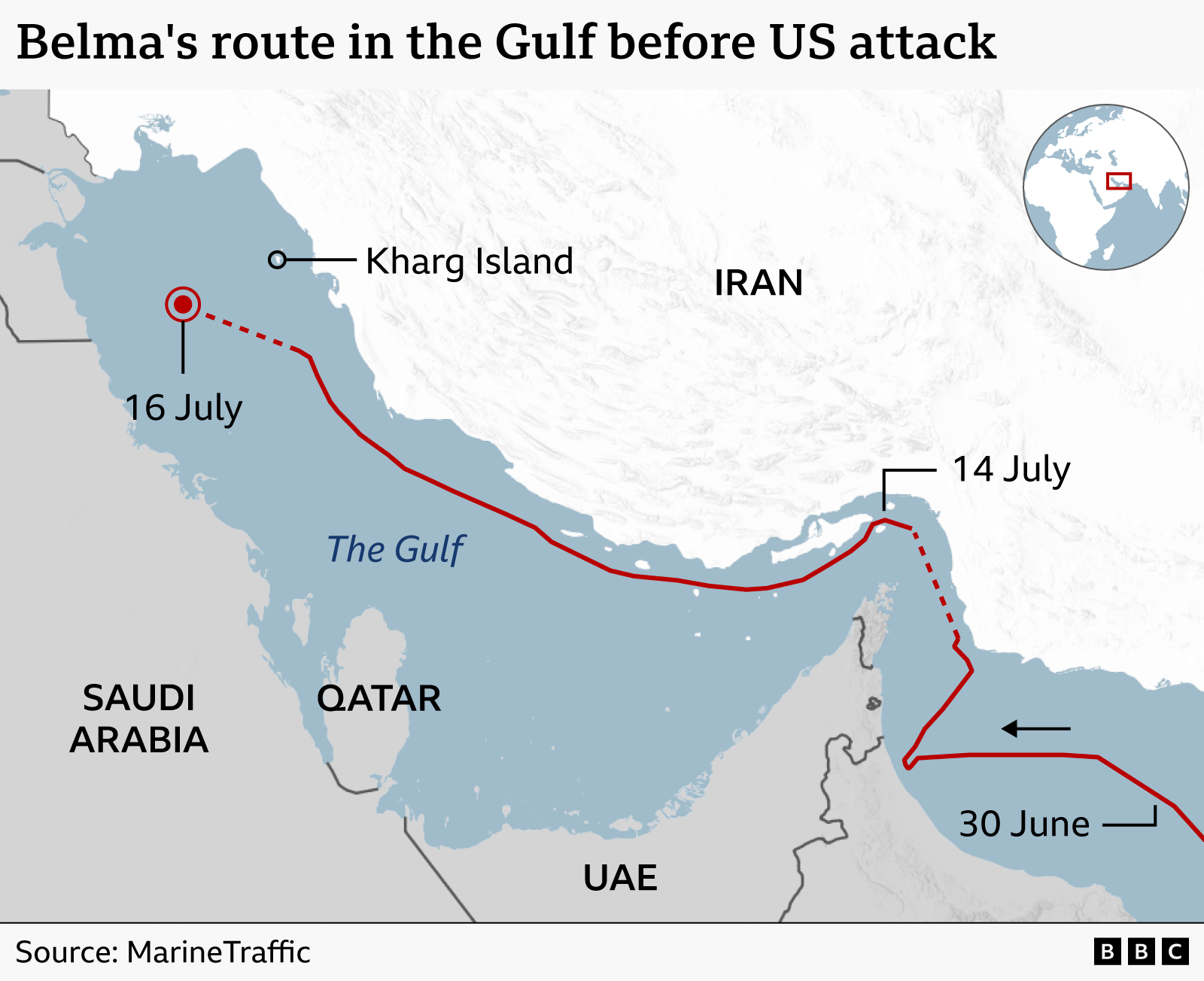
The United States has struck an oil tanker, "Belma", in the Gulf of Oman with Hellfire missiles. The attack took place as the vessel approached Iran’s Kharg Island, the country’s largest oil export terminal.
US Central Command said the tanker had ignored several warnings and was hit by a missile that struck its smokestack. The hit disabled the ship, effectively marking the return of a naval blockade that was paused after a ceasefire deal in June.
The blockade, which had been in force from 13 April to 18 June, also saw the US redirect more than 140 vessels and disable nine ships. Over the past weeks, Iran has exported at least 74 million barrels of oil valued at more than $6 billion, according to researchers.
Shipping traffic through the Strait of Hormuz, a critical chokepoint, has fallen below the pre‑conflict daily average of 138 vessels. Recent data from maritime intelligence firm Kpler shows only 11 ships crossed the strait on Wednesday, down from 17 on Monday.
Iran’s recent attacks on shipping have prompted the US to re‑introduce sanctions and a temporary license to facilitate oil sales. The situation remains tense as both powers adjust their strategies in response to the evolving conflict.