In brief
At an international summit, Malala Yousafzai urged Muslim leaders to confront the Taliban's oppressive treatment of women and girls in Afghanistan, highlighting the need for educational access and women’s rights.
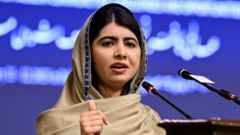
Malala Yousafzai has made a powerful statement against the Taliban's treatment of women and girls in Afghanistan, urging Muslim leaders to take action during a recent summit focused on girls' education in Islamabad, Pakistan. She expressed that the Taliban, “do not see women as human beings," and labeled their repressive policies as “nothing Islamic.”Having survived an assassination attempt by the Taliban at age 15 for advocating for girls' education, Malala emphasized the severe implications of the Taliban's gender policies, which she describes as creating a “system of gender apartheid.” She pointed out that the Taliban punishes women who challenge their oppressive laws, enforcing severe consequences. The summit was organized under the collaboration of various Islamic organizations, with notable attendance from ministers and scholars advocating for girls’ rights. However, no representatives from the Taliban attended the event. While they did not respond to Malala's remarks, the Taliban has previously claimed to respect women’s rights, albeit through their narrow interpretation.Since the Taliban regained control in 2021, they have barred girls from obtaining secondary education—making Afghanistan the only country globally to enforce such a ban. Malala highlighted that over 1.5 million girls have been denied schooling. Furthermore, the Taliban’s recent ban on women becoming midwives and nurses has further restricted educational opportunities.Malala concluded her address by recognizing that the risks to girls' education are a global issue, referencing crises in regions like Gaza, Yemen, and Sudan, underscoring the urgent need to fight for the rights of girls everywhere.