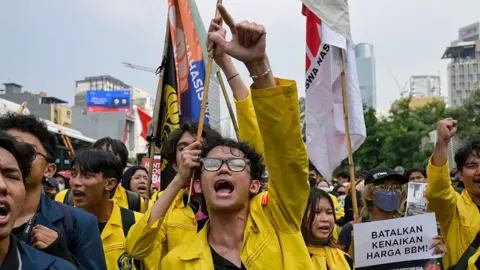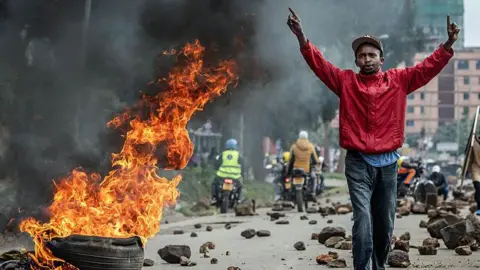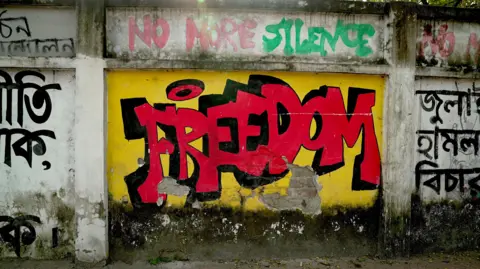
A recent youth uprising successfully overthrew Sheikh Hasina's autocratic rule in Bangladesh, with significant involvement from Gen Z. As protests escalated, police violence led to thousands of deaths, serving as a rallying point for younger generations demanding change. Rahat Hossain, a prominent figure in the movement, witnessed the death of his friend during the protests, a poignant reminder of the sacrifices made for their cause.
With Hasina exiled and a new interim government formed, hopes rose for a ‘new Bangladesh’. Yet, as elections approach, political divisions exposed among the youth-led National Citizen Party (NCP) have emerged, alongside sidelining of women activists. While Jamaat-e-Islami, an established party, has started gaining support from young voters, questions linger about the effectiveness of the NCP's leadership.
Many, like Hossain, are disenchanted with the current political landscape that favors remnants of old power dynamics. While student activism sparked hope for a fairer society, the reality reveals a complex tug-of-war between old political traditions and the youth's aspirations for genuine change in Bangladesh.