In brief
At a massive military parade celebrating 80 years since China's victory over Japan in World War II, Xi Jinping, along with Vladimir Putin and Kim Jong Un, highlighted their political unity and showcased advanced military technology. While this was a show of strength for China, it also sends a message to the West, particularly in the wake of America’s changing diplomacy under Donald Trump. Analysts discuss the implications of China's military modernization and its ambitions to reshape global orders.
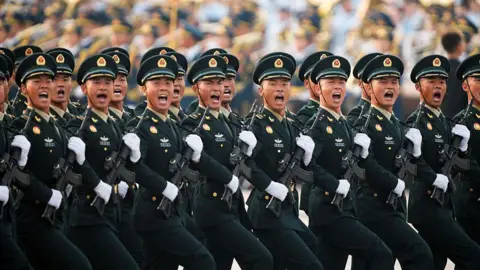
Chinese leader Xi Jinping, along with Russian President Vladimir Putin and North Korean leader Kim Jong Un, appeared together for the first time at a military parade in Beijing. This parade marked 80 years since China's victory over Japan in World War II, displaying new military assets, including advanced missiles and high-tech weaponry.
The event symbolizes Xi's intentions to position China as a formidable global power amidst changing international dynamics, especially in light of shifting policies from the United States under Donald Trump. As the West watches closely, this parade represented not just military power but also a significant geopolitical alignment.
China's military modernization, featuring hypersonic missiles and autonomous weapon systems like the AJX002 underwater drone, signals its ambitions to overtake Western military capabilities. The leaders' public appearances are a deliberate move against U.S. influence, sparking debates over a potentially new world order.
Global observers express concern over the implications of this shift, stressing the need for Western countries to reevaluate their diplomatic strategies as China capitalizes on the gaps left by U.S. foreign policy under Trump.