In brief
While Colombia's La Guajira region is prime for renewable energy development, the Wayuu indigenous community grapples with cultural disruptions and divided opinions on wind farms, highlighting the complex balance between eco-initiatives and local traditions.
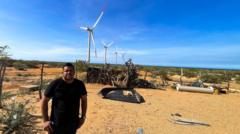
José Luis Iguarán stands in his backyard in La Guajira, Colombia, where majestic wind turbines now dominate the landscape that once showcased trees and traditional livelihoods. The Wayuu indigenous group has inhabited this northern region for generations, relying on herding goats, fishing, and farming. However, as Colombia transitions to renewable energy, the introduction of wind farms, including Guajira 1, has sparked mixed feelings among the Wayuu. “Instead of trees, now we hear and see these turbines,” Mr. Iguarán laments. His community's connection to dreams, regarded as sacred and a link to ancestry, is compromised by the noise from the turbines, altering an integral aspect of their culture. Nevertheless, the local energy company Isagen has provided some benefits, such as better water access and improved housing.Opposition exists within the Wayuu community as well. Concerns mount around transparency in negotiations and the management of compensation. “There’s a lot of frustration,” says Wayuu fisherman Aaron Laguna, whose village is in discussions over a new wind farm. He mentions feelings of local exclusion from negotiations, sparking internal disputes within the community.The complexity of renewable energy’s imposition on indigenous peoples is evident. Research shows significant cultural and social impacts, particularly given the Wayuu's spiritual relationship with the wind, seen as living entities rather than mere energy sources.Recent setbacks for other energy companies underline the tensions, with protests disrupting projects, revealing ongoing dissatisfaction. Meanwhile, the environmental needs of the country necessitate a clean energy transition, which has yet to be harmonized with the interests of local populations. While investors like AES Colombia promote community welfare and open dialogue, mistrust remains due to past fails in negotiations. Residents desire infrastructural improvements and access to the clean energy produced but face a paradox where the immediate benefits remain elusive.Ultimately, the Wayuu's journey illustrates a crucial story of progress and preservation amidst the winds of change, leaving them with lingering questions about their future in an increasingly green Colombia.