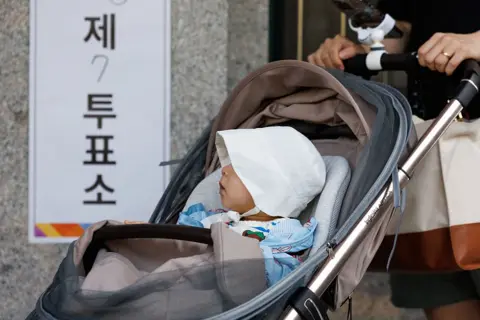
Despite the challenges, many South Koreans express a desire for children, pointing to social and financial pressures that complicate this goal. With government intervention offering subsidies for fertility treatments, the landscape is changing, attracting hopes of a demographic turnaround.
---
In recent years, South Korea has been facing a demographic crisis as its birth rates plunged to record lows, with the latest figure at 0.75 babies per woman. However, this crisis has prompted a surprising boom in the fertility clinic industry. Young couples and single women are increasingly turning to medical assistance in family planning, with IVF becoming a common choice. Reports show a 50% rise in fertility treatments from 2018 to 2022, resulting in one in six births in Seoul occurring via such methods last year.
This shift is attributed to changing attitudes towards parenting and financial autonomy. More South Koreans express the desire to start families, despite facing societal pressures related to traditional gender roles and financial constraints. The government is stepping in with subsidies for fertility treatments to encourage parenthood, offering up to 2 million won ($1,460) for procedures like egg-freezing.
While there is cautious optimism surrounding these policy changes, women still face the harsh realities of the IVF process, often requiring multiple attempts to succeed, all while navigating workplace challenges and the financial burden that accompanies fertility treatments.
---
In recent years, South Korea has been facing a demographic crisis as its birth rates plunged to record lows, with the latest figure at 0.75 babies per woman. However, this crisis has prompted a surprising boom in the fertility clinic industry. Young couples and single women are increasingly turning to medical assistance in family planning, with IVF becoming a common choice. Reports show a 50% rise in fertility treatments from 2018 to 2022, resulting in one in six births in Seoul occurring via such methods last year.
This shift is attributed to changing attitudes towards parenting and financial autonomy. More South Koreans express the desire to start families, despite facing societal pressures related to traditional gender roles and financial constraints. The government is stepping in with subsidies for fertility treatments to encourage parenthood, offering up to 2 million won ($1,460) for procedures like egg-freezing.
While there is cautious optimism surrounding these policy changes, women still face the harsh realities of the IVF process, often requiring multiple attempts to succeed, all while navigating workplace challenges and the financial burden that accompanies fertility treatments.