Chega's victories mark a significant shift in Portugal's political landscape, challenging the traditional two-party dominance. Montenegro, while promoting investment and social justice, confronted his own controversies linked to his past business dealings. Santos, meanwhile, did not hold back, suggesting Montenegro might be unfit for leadership as the country braces for a new political chapter.
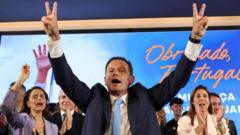
In a shocking election outcome, Portugal's ruling right-of-centre Democratic Alliance, under the leadership of Luís Montenegro, emerged victorious in a snap parliamentary election but fell short of securing a majority. This marks the third election in just three years for Portugal, illustrating a tumultuous political landscape.
Montenegro celebrated his party's success, promising to enhance investment and uphold both prosperity and social justice. The Socialist Party, however, led by Pedro Nuno Santos, faced a major setback, finishing second and losing numerous seats, putting them in a tight race with the far-right party, Chega.
Santos announced his resignation, highlighting a steep decline in support for the Socialists. Chega's leader, André Ventura, claimed their strong results signal a break from the two-party system, especially as their campaign centered on immigration and corruption issues, resonating with voters disillusioned by recent political scandals. With the government in turmoil following a lost vote of confidence, Portugal’s future political landscape is uncertain as the dust settles on this election.
In a shocking election outcome, Portugal's ruling right-of-centre Democratic Alliance, under the leadership of Luís Montenegro, emerged victorious in a snap parliamentary election but fell short of securing a majority. This marks the third election in just three years for Portugal, illustrating a tumultuous political landscape.
Montenegro celebrated his party's success, promising to enhance investment and uphold both prosperity and social justice. The Socialist Party, however, led by Pedro Nuno Santos, faced a major setback, finishing second and losing numerous seats, putting them in a tight race with the far-right party, Chega.
Santos announced his resignation, highlighting a steep decline in support for the Socialists. Chega's leader, André Ventura, claimed their strong results signal a break from the two-party system, especially as their campaign centered on immigration and corruption issues, resonating with voters disillusioned by recent political scandals. With the government in turmoil following a lost vote of confidence, Portugal’s future political landscape is uncertain as the dust settles on this election.