Train drivers in Spain are due to begin a three-day nationwide strike on Monday in protest of what they say is a lack of safety guarantees on the country's rail system. The action follows two fatal train crashes in January, one in Adamuz which killed 46 people, and another just days later near Barcelona where a train driver died. These incidents have resulted in significant disruptions for travelers and cast doubt on the reliability of Spain's rail network.
The train drivers' union, Semaf, is demanding the hiring of more staff and greater investment in maintenance, highlighting what they call the “constant deterioration of the rail network.” Following the crashes, safety checks revealed additional faults and maintenance issues on several routes. Prime Minister Pedro Sánchez is expected to be questioned in parliament about the failures within the rail system.
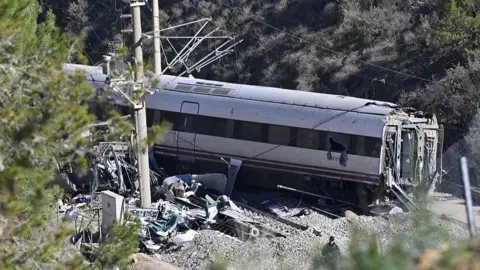
The tragic accident in Adamuz, where a high-speed train derailed and collided with another, is noted as Spain's worst rail disaster in over a decade. Preliminary investigations point to track fractures as potential causes for the derailment. Just two days later in Catalonia, a trainee driver died and more than 37 passengers were injured due to a wall collapse that caused another train to derail.
Semaf stated that these collisions mark a turning point in their fight for improved railway safety. Despite the government's assertion of sustained investment, the scrutiny of the rail network's maintenance and operational guarantees continues amidst public concern.
The train drivers' union, Semaf, is demanding the hiring of more staff and greater investment in maintenance, highlighting what they call the “constant deterioration of the rail network.” Following the crashes, safety checks revealed additional faults and maintenance issues on several routes. Prime Minister Pedro Sánchez is expected to be questioned in parliament about the failures within the rail system.
The tragic accident in Adamuz, where a high-speed train derailed and collided with another, is noted as Spain's worst rail disaster in over a decade. Preliminary investigations point to track fractures as potential causes for the derailment. Just two days later in Catalonia, a trainee driver died and more than 37 passengers were injured due to a wall collapse that caused another train to derail.
Semaf stated that these collisions mark a turning point in their fight for improved railway safety. Despite the government's assertion of sustained investment, the scrutiny of the rail network's maintenance and operational guarantees continues amidst public concern.