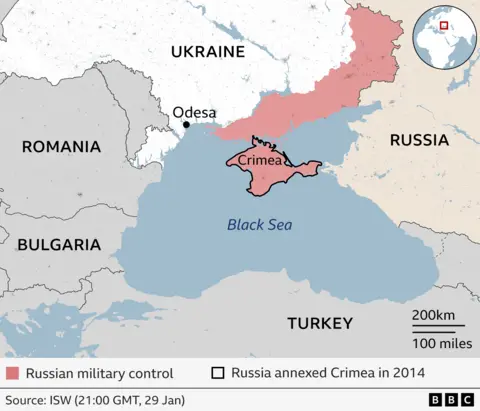
The Black Sea is littered with deadly weapons. But no-one knows how many – or where they are. Vitalii, a 31-year-old Ukrainian Navy diver, describes an intense and careful operation while swimming towards explosive devices lining the seabed. As a part of a specialized team, he faces the clandestine dangers of the sea often strewn with mines laid during Russia's invasion. These mines are an enduring threat, drifting unpredictably and posing great risks to swimmers and vessels alike. Last summer, three innocent swimmers lost their lives to these hidden explosives.
The mines are just one part of a more significant issue – the total number of unexploded military ordnance in the area, including missiles and artillery shells, which were swept into the sea after the Kakhovka dam collapse. The navy’s countermeasures group, led by a sharp-eyed commander named Fox, estimates the mine count could be in the thousands, making their work essential yet perilous.
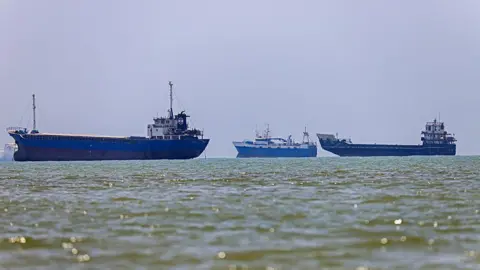
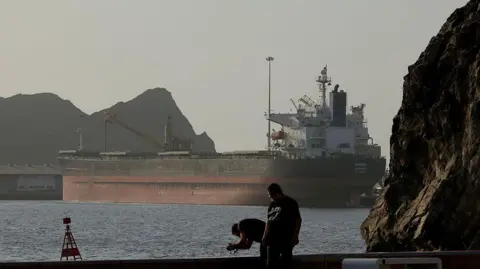
Despite the dangerous conditions under which they operate, including the constant threat of Russian aerial attacks, the team remains focused on ensuring that merchant ships can safely navigate these waters to maintain their crucial economic activity through maritime exports.
Vitalii explains how approaching a mine requires immense caution: a slow and deliberate movement. Every second is critical, as one wrong move could result in disaster. Communication among team members is key, and the process often takes days, with controlled detonation methods being employed to safely neutralize threats.
While Russia retains some operational advantages on land and air, the tides have shifted in maritime control, with Ukraine's ongoing efforts helping to create safe passageways through this troubled sea. As the conflict continues, divers like Vitalii pledge to return to these perilous depths, determined to clear the waters for the future of Ukraine.
The mines are just one part of a more significant issue – the total number of unexploded military ordnance in the area, including missiles and artillery shells, which were swept into the sea after the Kakhovka dam collapse. The navy’s countermeasures group, led by a sharp-eyed commander named Fox, estimates the mine count could be in the thousands, making their work essential yet perilous.
Despite the dangerous conditions under which they operate, including the constant threat of Russian aerial attacks, the team remains focused on ensuring that merchant ships can safely navigate these waters to maintain their crucial economic activity through maritime exports.
Vitalii explains how approaching a mine requires immense caution: a slow and deliberate movement. Every second is critical, as one wrong move could result in disaster. Communication among team members is key, and the process often takes days, with controlled detonation methods being employed to safely neutralize threats.
While Russia retains some operational advantages on land and air, the tides have shifted in maritime control, with Ukraine's ongoing efforts helping to create safe passageways through this troubled sea. As the conflict continues, divers like Vitalii pledge to return to these perilous depths, determined to clear the waters for the future of Ukraine.