In brief
In a bold move, Russia's Memorial to Soviet Civilians emphasizes the suffering of Soviet citizens in WWII, sidelining the Holocaust narrative. With growing tensions in international relations and the exclusion of officials from significant commemorations, the debate on victimhood and memory in history takes center stage amid rising right-wing sentiments.
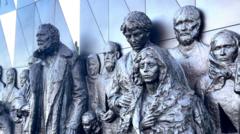
On the edge of St Petersburg stands a monumental memorial dedicated to "Soviet civilians who fell victim to the Nazi genocide," reflecting a shift in Russia's historical narrative. The memorial, featuring a towering figure of a mother with her children and an eternal flame inscribed with the names of concentration camps, was unveiled by President Vladimir Putin on January 27, a date significant to both the collapse of the Leningrad siege in 1944 and the liberation of Auschwitz one year later. However, the commemoration of the 80th anniversary of Auschwitz's liberation this year does not include Russian officials. Putin's recent comments focused on the broader genocide of Soviet citizens, asserting the Nazis sought to exploit Soviet resources while exterminating its people, significantly downplaying Holocaust-specific narratives. While actions in the 80 years since the war began to acknowledge the tragedy of the Holocaust, the current climate emphasizes Soviet suffering during the Great Patriotic War, a move noticed by critics including Israel's Ambassador to Moscow. The ambassador stressed the Holocaust's targeted plan for systematic extermination of Jews, distinguishing it from the broader Russian narrative of victimhood.As Putin’s administration shapes this narrative, it echoes sentiments of historical victimization as relations with the West plummet following Russia’s invasion of Ukraine. The decision not to invite Russian officials to Auschwitz is described as a probable recognition of Russia's current stance toward freedom and democracy.Jewish leaders in Russia feel the snub is an injustice to the memory of the liberators. Community efforts in Russia aim to clarify the historical context of the Holocaust amidst rising denial and right-wing extremism. As the debate over memory, accountability, and historical narratives continues, the emphasis on a collective struggle in WWII evinces a complex legacy that both honors the past and navigates the present geopolitical landscape.