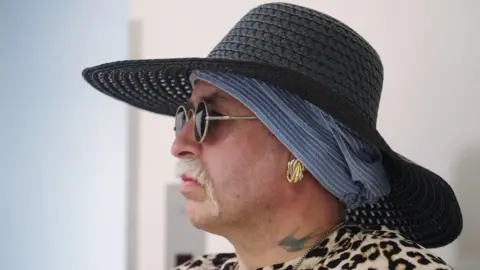
A shocking story is unfolding in Germany, where TV star Collien Fernandes, age 44, has made serious allegations against her ex-husband, Christian Ulmen. She claims he disseminated pornographic deepfakes of her, a situation that has shaken fans and drawn attention to the dangers of digital abuse. During a protest in Hamburg, Fernandes expressed the gravity of the threats she has received, stating she was even wearing a bulletproof vest for her protection.
The accusations came to light last week through an article in the magazine Der Spiegel, and since then, they've led to demonstrations demanding stronger laws against such digital crimes. In response to the public outcry, the German government is considering making the creation and distribution of deepfake porn a criminal offense, potentially carrying a prison sentence.
Ulmen, on the other hand, vehemently denies the allegations. His legal team insists that he has not produced or shared any fake videos, asserting that the controversy is unrelated to broader discussions on deepfake legislation in Germany. The couple's celebrity status has only intensified media scrutiny, revealing critical gaps in existing laws, particularly regarding non-consensual sexualized images and the protection of vulnerable individuals.
A coalition of 250 women from various sectors is demanding stronger legislation, including explicit criminalization of deepfake pornography. Leading the call is Germany's Federal Justice Minister, who has promised to tighten legal protections for victims of digital abuse.
The situation reflects underlying societal issues related to gender-based violence, as well as a political landscape grappling with modernization of outdated laws. This controversy not only centers on Fernandes’ personal plight but also exposes broader public demands for justice and accountability within the digital realm.
The accusations came to light last week through an article in the magazine Der Spiegel, and since then, they've led to demonstrations demanding stronger laws against such digital crimes. In response to the public outcry, the German government is considering making the creation and distribution of deepfake porn a criminal offense, potentially carrying a prison sentence.
Ulmen, on the other hand, vehemently denies the allegations. His legal team insists that he has not produced or shared any fake videos, asserting that the controversy is unrelated to broader discussions on deepfake legislation in Germany. The couple's celebrity status has only intensified media scrutiny, revealing critical gaps in existing laws, particularly regarding non-consensual sexualized images and the protection of vulnerable individuals.
A coalition of 250 women from various sectors is demanding stronger legislation, including explicit criminalization of deepfake pornography. Leading the call is Germany's Federal Justice Minister, who has promised to tighten legal protections for victims of digital abuse.
The situation reflects underlying societal issues related to gender-based violence, as well as a political landscape grappling with modernization of outdated laws. This controversy not only centers on Fernandes’ personal plight but also exposes broader public demands for justice and accountability within the digital realm.