In brief
The struggle of a children's football club in Bethlehem highlights the challenges faced by Palestinians in accessing safe spaces for recreation. Israeli authorities have issued a demolition ultimatum against the pitch, claiming it was built illegally. This has led to widespread support from the community and international observers who see the pitch as a vital outlet for local youth. Amidst these tensions, the kids express their dreams and hopes tied to the field they desperately want to keep.
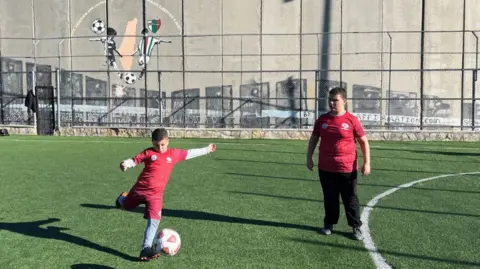
A Palestinian children's football club in the occupied West Bank faces imminent demolition despite an international campaign to save it. Its supporters say it provides a rare sporting opportunity for young Palestinian players. But Israel insists it's been built without the necessary permits. In this deeply divided land so much is contested; from the identities and faiths of the people who live here, to every inch of the ground they stand on.Recently, that has come to include one small patch of artificial turf laid down under the shadow of the giant concrete wall that isolates Israel from much of the occupied West Bank. In the context of the 7 October attacks, the two-year war in Gaza, and the fragility of the current ceasefire, there are without doubt far more pressing issues. But this is a story freighted with symbolism and one which has drawn outsized international attention because of its connection to that other world religion - football.On the day we visit, a group of Palestinian children are lining up to take penalty shots in the winter sunshine. The construction of the pitch began here on the edge of Bethlehem in 2020, and today it provides a place to practice for more than 200 young players from the nearby Aida refugee camp. The cramped and crowded streets contain the homes of the descendants of Palestinian families forced from their homes during the 1948 Arab-Israeli war. On 3 November last year, as the children made their short walk from the camp for that day's training, they found a notice pinned to the gate of the football field declaring it illegal. The notice was followed soon by a demolition order.We don't have anywhere else to play, 10-year-old Naya told me, wearing a Brazil shirt with the name of footballing legend Neymar emblazoned on the back. We are building our dreams here. If they demolish our field, they will demolish our dreams.Parents and community members have rallied in support, with the club launching a social media campaign that garnered thousands of signatures advocating for their cause. Following a lawyer's intervention, the club recently received a brief reprieve, but the future remains uncertain.The looming presence of the wall, running alongside the pitch, serves as a stark reminder of the ongoing Israeli occupation. While Israel maintains significant control over the entirety of the West Bank, day-to-day governance remains a complex patchwork.The club's founders argue that the demolition threat represents more than mere legalities; it symbolizes the larger struggles of the Palestinian community as they fight for their rights and a space where their children can dream and thrive. Despite the uncertainty with the future of the pitch, the children remain hopeful, always taking their shots in practice with determination—dreaming of a day when their field remains safe from threats of demolition.