In brief
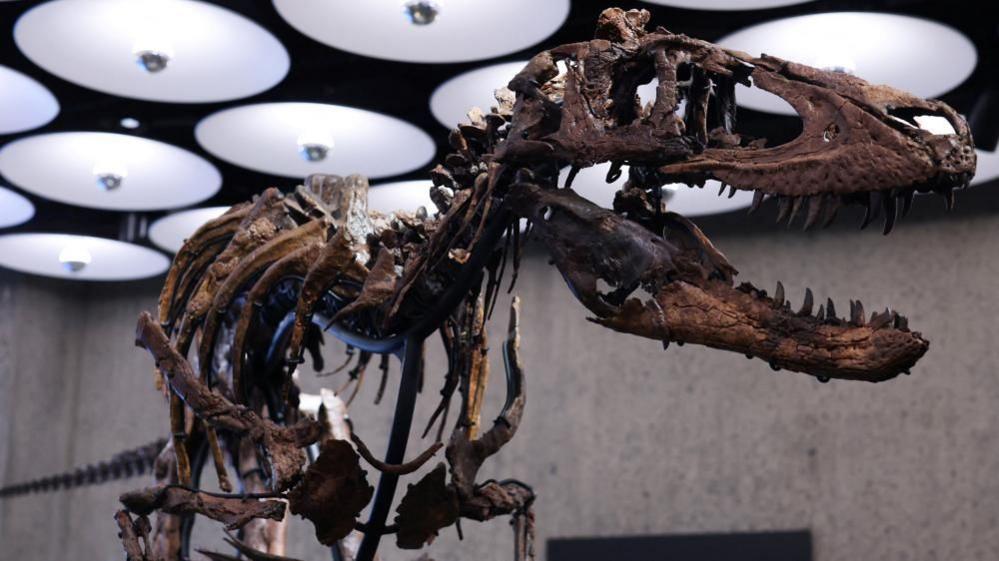
Jodi, a nearly complete skeleton of the newly‑named Nanotyrannus, is up for auction in New York with a basis price of $6m (£4.5m). The 10‑foot dinosaur, once mis‑identified as a juvenile T‑rex, now counts as a separate species and is one of only three known skeletons. Paleontologists are divided: some fear that the high price could consign the fossil to private hands, curtailing public access and research, while others note that wealthy collectors sometimes donate specimens to museums.
Alert: A 10‑foot dinosaur skeleton named “Jodi” is heading to auction in New York, with a starting price of $6m (£4.5m) and could fetch up to $9m.
Jodi is not a teen T‑rex as once thought – scientists now recognize it as a distinct species, the Nanotyrannus, a slimmer predator that lived 67 million years ago.
The skeleton, which was found on rancher Jodi Pierson’s land in Montana, was initially displayed at London’s Frieze Masters art fair before the new classification in 2025.
Sotheby’s says the nearly complete skeleton has 191 bone pieces and a “beautifully preserved” skull, making it one of only three known Nanotyrannus skeletons.
The discovery of the “Dueling Dinosaurs” in 2006 – a Nanotyrannus biting a Triceratops – helped prove that the species exists separately from T‑rex.
But the sale has sparked a heated debate. Some paleontologists worry that the private ownership of such fossils could limit scientific study and public access.
Prof. Steve Brusatte of the University of Edinburgh warned that a new “rich‑collector frenzy” could see important fossils disappear behind locked doors.
Others, like palaeontologist Megan Jenkins, contend that elite buyers sometimes end up donating the specimens to museums, though the risk remains.
The auction follows Sotheby’s recent record, selling a T‑rex skeleton called “Gus” for $50.1m (£37.4m) in July.
Experts say that large prices can drive more fossil discoveries, but they also stress the need for clear legal and ethical guidelines.
Whether “Jodi” will land in a museum, a private vault, or somewhere in between, the auction has highlighted the growing intersection of science, treasure hunting, and high‑stakes investing.