Eritrea has withdrawn from East African regional bloc Igad, accusing the organisation of becoming a tool against countries like itself.
In a statement on Friday, Eritrea's foreign ministry asserted that Igad had strayed from its founding principles and failed to contribute to regional stability. The withdrawal is set against a backdrop of escalating tensions and hostile remarks between Eritrea and its neighbor, Ethiopia, raising fears of renewed armed conflict.
In response to Eritrea's statement, Igad remarked that the country had not made any tangible proposals or engaged meaningfully with reforms.
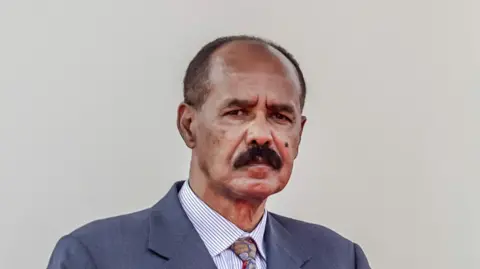
Established to promote regional stability and food security, Igad's membership includes Ethiopia, Kenya, Sudan, South Sudan, Uganda, and Djibouti. Eritrea, under President Isaias Afwerki, has long accused Igad of siding with Ethiopia in regional disputes, and this is not the first time Eritrea has pulled out of the bloc; the country previously left in 2007 during its border conflict with Ethiopia.
Relations have continued to deteriorate, as Eritrea accuses Ethiopia's Prime Minister Abiy Ahmed of demanding access to the Red Sea, which Eritrea views as a direct threat to its sovereignty. This conflict has historical significance, as Eritrea gained independence from Ethiopia in 1993 following a bloody struggle.
The tension between the two nations has persisted for decades, with accusations of destabilization and external interference complicating the regional dynamics. Igad's effectiveness has faced criticism over its inability to resolve ongoing conflicts in the Horn of Africa, a region struggling with civil wars and threats of terrorism.