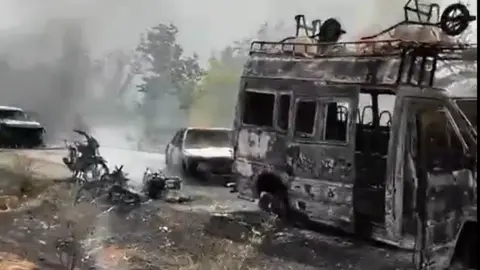
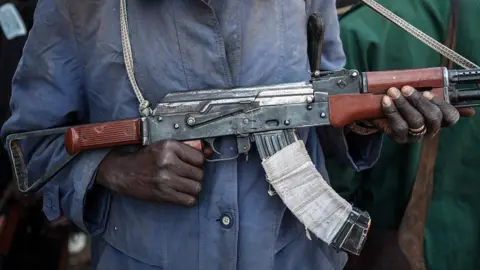
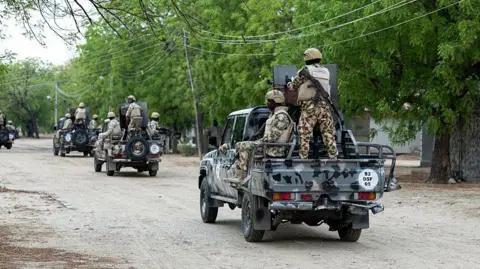
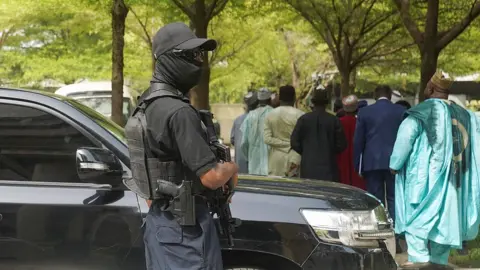
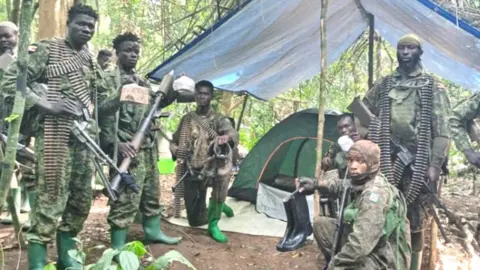
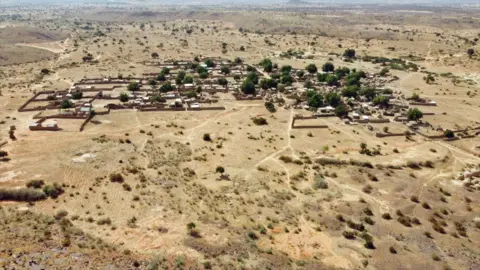
Deep fear has long pervaded the arid savannah plains and highlands of north-western Nigeria - even before the US air strikes on the Islamist militants who have made this area their base on Christmas night. The heavily armed jihadists, who dress in camouflage and wear vibrant turbans, have lived in camps in Tangaza, a remote area of Sokoto state near the border with Niger, for several years. They belong to a group called Lakurawa and hail from areas north of Nigeria in the Sahel. Locals in Tangaza, a community made up of mainly moderate Muslims, believe they come from Niger and Mali - and are terrified of them. Recently, both US and Nigerian authorities have said the militants are affiliated with Islamic State (IS) groups in the Sahel - though IS has not linked itself to any of the group's activities or announced ties to Lakurawa as it has done with other groups in the region that it backs. When the BBC visited Nukuru, a remote village near the US missile strikes, most people were deeply suspicious and reluctant to talk about Lakurawa due to fears of reprisal. Following a police escort into the dangerous area, residents expressed their fear that the militants would regroup despite the US and Nigerian military operations. With government presence minimal and little infrastructure to support the community, residents feel trapped. They have reported that the militants have imposed harsh rules, enforcing a strict interpretation of Islamic law and demanding taxes from villagers. Locals are left voicing their discontent, stating that life has become dictated by these militants, who are often seen moving freely throughout the area armed and on motorbikes. The situation underscores the complexity of Nigeria's security landscape, where overlapping layers of violence from various groups leave communities struggling for safety and stability.
Fear Grips Nigeria: The Rise of Lakurawa Militant Group
Fear Grips Nigeria: The Rise of Lakurawa Militant Group
In rural Nigeria, villagers live in fear of the Lakurawa militants. After recent US airstrikes aimed at them, tension escalates as locals fear repercussions from this armed group. Discover the stories from those impacted by the violence in the Sahel region.
In remote villages of northwestern Nigeria, residents are caught in a web of fear due to the presence of the Lakurawa militant group. With ties to broader Islamist movements, these heavily armed jihadists have taken control of communities, instilling terror and enforcing strict adherence to their interpretation of Islamic law. Following recent US airstrikes targeting their camps, villagers express concern of retaliation and question their safety. Despite escalating military efforts, the roadmap to stability remains shaky as these militants utilize their knowledge of the terrain to evade complete dismantlement.