In brief
On Sherbo Island, Sierra Leone, local fishing crews say they see their nets and catches disappearing – a problem they blame on large Chinese trawlers. These ships, the fishermen say, swim right into the island’s forbidden zone, even cutting nets and running aground. Protestors argue that the government's oversight is weak, while corporate officials deny the allegations and stress compliance with international law. The global market, the fishermen say, fuels this reckless fishing, and they call on consumers and regulators to demand clean‑water shipping practices.
The African fishermen who blame Chinese trawlers for their woes
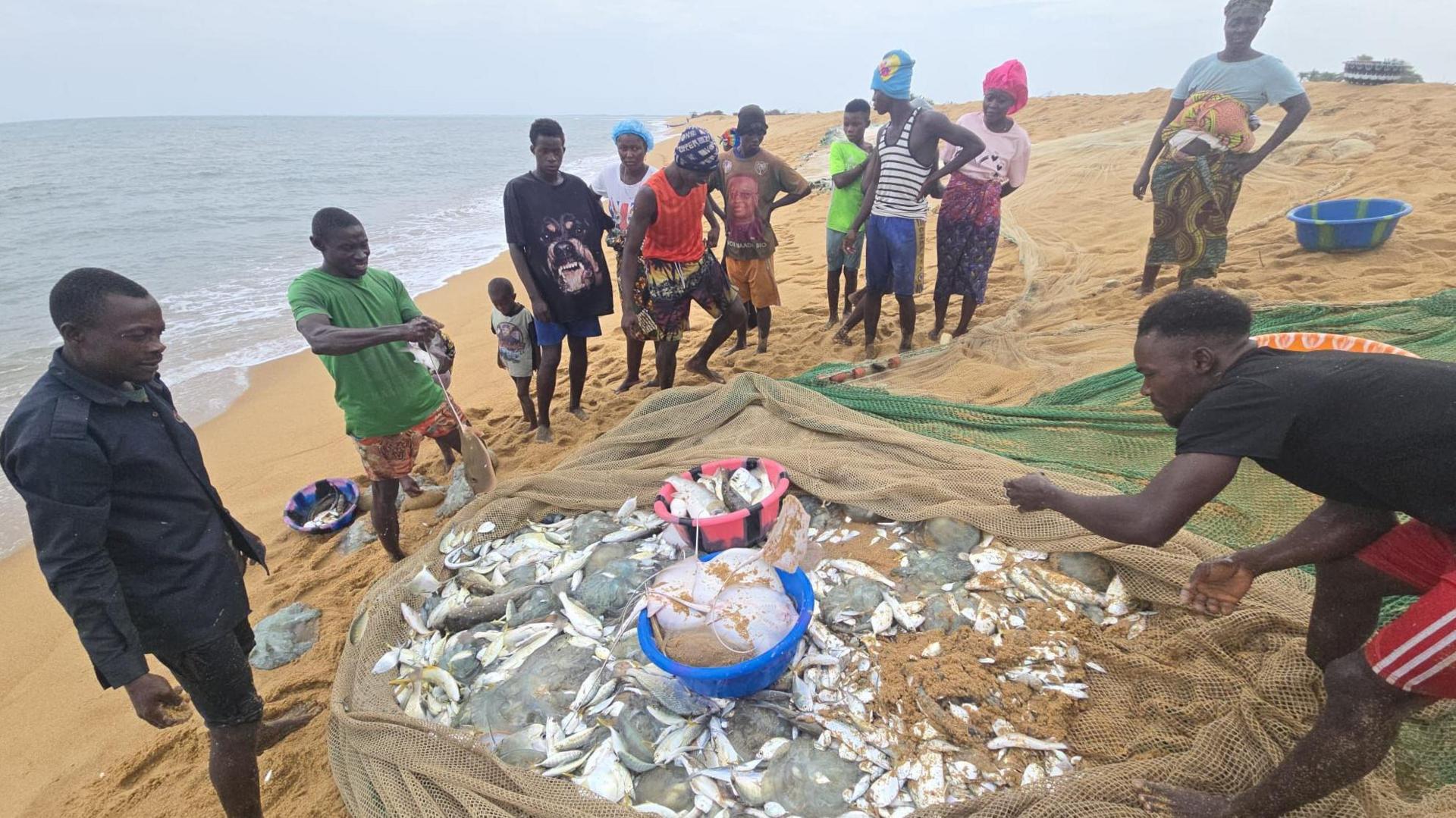
On Sherbo Island, fishermen work together to pull in nets filled with snaps, mackerel, rays and other sea life. In recent years, the catch feels smaller, and the whole community complains that big, foreign trawlers are to blame.
Marie Pierre says she finds fewer sardines and scraps of jellyfish in her nets. “Those trawlers come near our boats at night and cut the lines,” Musa Gassimo says, pointing to ships that loom in the distance. He estimates each damaged net costs him around $250 (£189).
West Africa is a hotspot for illegal fishing. A 2024 report says about 40% of all unlicensed catches come from these waters, costing the region $10 billion in lost revenue and threatening food security. The local fishermen’s union president, Thomas Turay, says his catch has dropped more than 40% and points to Chinese vessels as the main culprits.
Turay claims corruption is a key issue: “Some people with the skill can bribe the authorities and continue to fish illegally.” Other fishermen say they report incidents to the Fisheries Ministry, but no action follows. The ministry denies the allegations, saying all foreign ships now carry transponders and that penalties for violating the 7‑mile exclusion zone are severe, though not yet enforced.
Steve Trent of the Environmental Justice Foundation argues that Chinese government support, like subsidies and lax oversight, fuels the problem. He calls for better tracking of commercial vessels and pressure from global consumers to demand sustainably sourced seafood. He also stresses that illegal fishing ends up in supermarkets and restaurants worldwide.
The pull to clean up waters comes at a time when global demand for seafood remains high. While official statements assure strict enforcement, the fishermen on Sherbo Island continue to chase nets with heavy hearts, hoping for a future where the sea is shared fairly, not just exploited by distant‑water fleets.