In brief
In an innovative study, researchers from Delhi's Maulana Azad Medical College have found that listening to music during general anesthesia can significantly reduce the amount of anesthetic needed for patients undergoing surgery. By exploring the effects of music on the unconscious mind, they discovered that patients who listened to calm instrumental music during their procedures required lower doses of propofol and fentanyl, leading to smoother recoveries and improved stress responses.
Under the harsh lights of an operating theatre in the Indian capital, Delhi, a woman lies motionless as surgeons prepare to remove her gallbladder.
She is under general anaesthesia: unconscious, insensate, and rendered completely still by a blend of drugs that induce deep sleep, block memory, blunt pain, and temporarily paralyse her muscles.
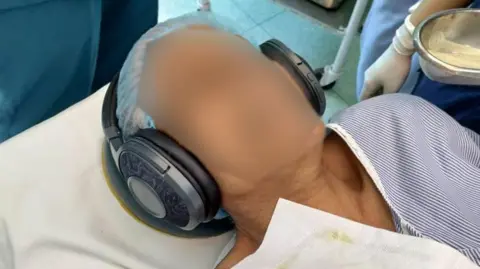
Yet, amid the hum of monitors and the steady rhythm of the surgical team, a gentle stream of flute music plays through the headphones placed over her ears.
Even as the drugs silence much of her brain, its auditory pathway remains partly active. When she wakes up, she will regain consciousness more quickly and clearly because she required lower doses of anesthetic drugs such as propofol and opioid painkillers than patients who heard no music.
That, at least, is what a new peer-reviewed study suggests. The research from Delhi's Maulana Azad Medical College and Lok Nayak Hospital offers compelling evidence that music played during general anaesthesia can modestly reduce drug requirements and enhance recovery speed.
The study is centered on patients undergoing laparoscopic cholecystectomy, the standard operation to remove the gallbladder. Because this procedure is typically short—under an hour—it requires patients to regain consciousness swiftly and clearly.
Dr. Farah Husain, a senior anaesthesia specialist and music therapist for the study, remarks, Our aim is early discharge after surgery. Patients need to wake up clear-headed, alert, and ideally pain-free. With better pain management, the stress response is curtailed. Their findings indicate that music can reduce not just reliance on drugs but also improve overall recovery outcomes.
In total, 56 adults aged 20 to 45 participated in the study, with half listening to music of their choice—soft flute or piano tunes—while the others did not. Results showed those exposed to music needed significantly less anesthesia and experienced lower stress levels.
Dr. Sonia Wadhawan, overseeing the study, highlights the potential of music therapy in anaesthesia, saying, The auditory pathway remains active even when you're unconscious. You may not remember the music, but the brain registers it. This innovative approach is expected to transform how hospitals view the intersection of music and surgical wellbeing, proving that soothing melodies can indeed support the healing process.