In brief
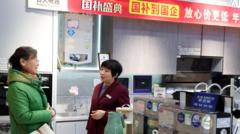
China is tackling its economic hurdles by introducing a trade-in scheme for kitchen appliances to stimulate consumer spending. This initiative allows consumers to receive discounts of up to 20% for trading in items like microwaves, dishwashers, and water purifiers. Previously, similar schemes included electronics and electric vehicles. Although initial results show increased sales, some experts remain skeptical about the overall impact on consumer spending. With a budget of 81 billion yuan (about $11 billion), the government attempts to shore up demand amid a property crisis and sluggish economic growth. The upcoming economic growth forecast for 2024 is expected to be around 5%.
China has faced several economic challenges in recent years. The Chinese government has expanded a list of products that people can trade in to get a discount of as much as 20% on new goods as the country tries to boost its flagging economy. The list now includes items like microwave ovens, dishwashers, rice cookers, and water purifiers. State-backed trade-in schemes already covered televisions, phones, tablets, and smart watches as well as electric and hybrid vehicles. The world's second-largest economy has been facing several challenges, including weak consumer demand and a deepening property crisis. On Wednesday, officials said 81 billion yuan (£8.9bn; $11bn) had been earmarked this year for the consumer goods trade-in scheme. China's top economic planning body has said the schemes, which were launched in March, have already produced "visible effects." According to the country's Ministry of Commerce, the policies have boosted sales of big-ticket items such as home appliances and cars. But some economists have questioned whether the schemes will be enough to significantly increase consumer demand. China-based economist Dan Wang said the measure is far from being enough to boost consumption. "While it has supported sales of some listed goods, such as cars and appliances, it hasn't driven an overall uptick in spending," said Harry Murphy Cruise, head of China economics at Moody's Analytics. In recent months, China has been pushing ahead with more measures to support its domestic economy as the country's exporters face growing challenges. In December, a key meeting of China's leaders stressed the need for "vigorous" efforts to boost consumer spending. That came as President-elect Donald Trump, who is due to return to the White House this month, threatened to impose a 60% tariff on Chinese-made products. China is due to announce its 2024 economic growth figures next week, which Beijing has said it expects will be around 5%.