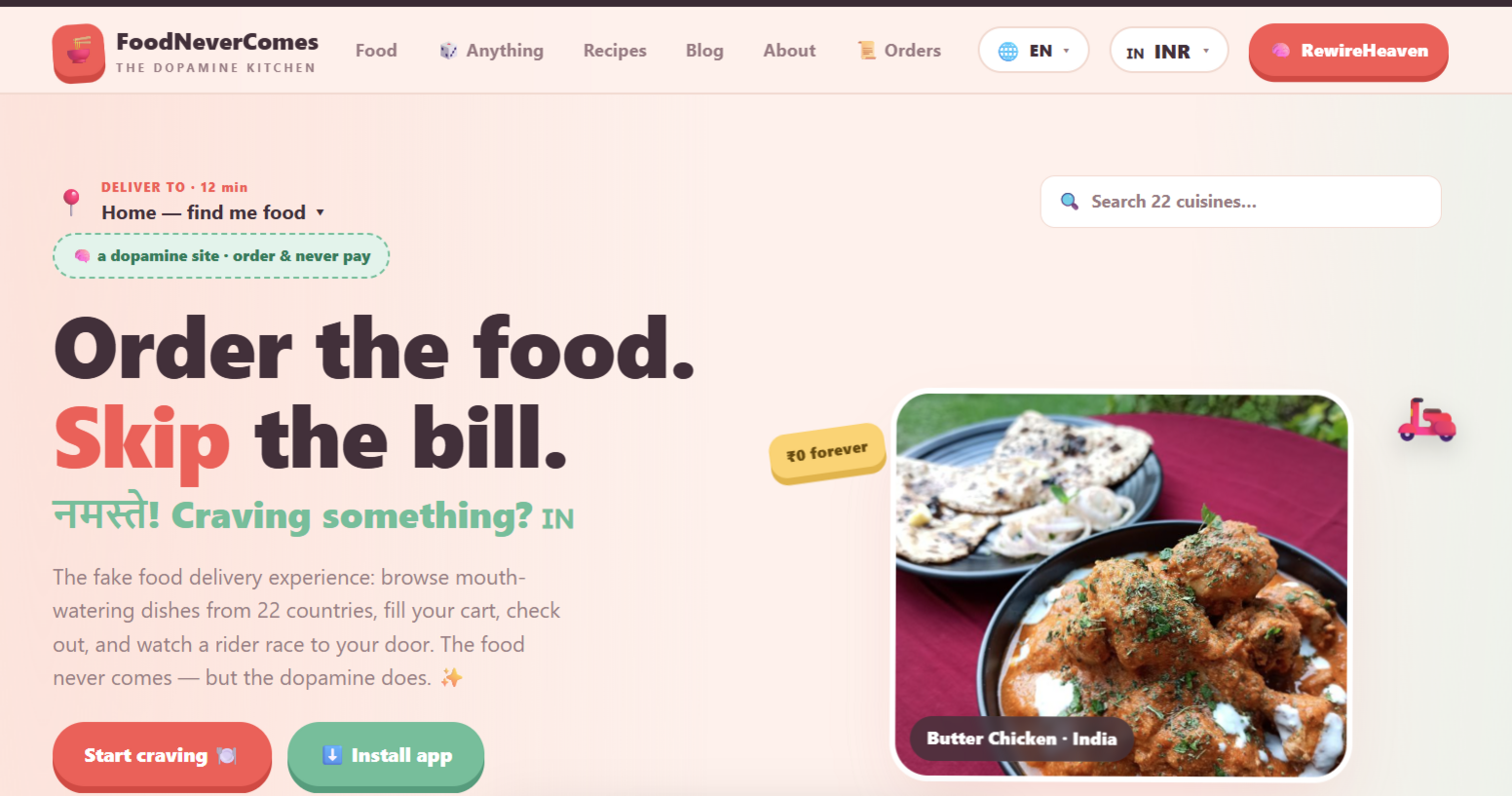
FoodNeverComes: The Fake Food Craze

It doesn’t matter if you’re actually hungry. On FoodNeverComes, you can pick dishes from 22 cuisines, watch the running total rise and hit checkout – only the prompt says “order the food. skip the bill.” The food never arrives, but the click‑throated anticipation keeps your dopamine up.
What Drives This Trick?
Developers Purvansh Parmar and Anshul Sharma say their own online “spending” habits – empty carts, impulsive orders – sparked the idea. They built the site to tease out the psychological pull of shopping, a concept that neuroscientist Ravi Dhar calls “anticipatory utility.” This is the thrill that comes before you get what you want.
A New Generation of ‘Dopamine Sites’
FoodNeverComes is part of a growing genre that includes Dopamine Shop and Fakehaul. These platforms reproduce the rituals of ordering, buying and traveling without the actual delivery, creating a kind of “simulated consumption.” Partners who visit claim the urge can help them calm cravings, while researchers warn it might reinforce the same neural circuits linked to real addiction.
Beyond Food: TripNeverLeaves
The founders expanded the idea with TripNeverLeaves, letting users plan a holiday – flight, seat, hotel – and then whisk them off a virtual plane that never leaves the runway. Over 100,000 visitors visit the site, and the blog explores psychological angles such as guilt and the “real” craving that can arise from fake orders.
Experts say that while the experience feels harmless, it also raises questions about modern consumption: if you get the dopamine hit before the product arrives, do you ever need it? The trend shows how digital rewards can blur the line between craving and purchase.