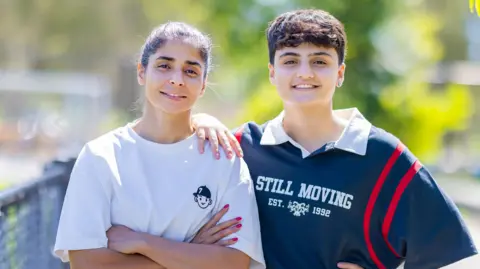
Two Iranian footballers who were granted asylum in Australia have said the country has given them hope for a future where we can live and compete in safety. Atefeh Ramezanisadeh and Fatemeh Pasandideh were among seven members of the Iranian team who were originally granted humanitarian visas while in Australia for the Women's Asian Cup - but the other five changed their minds and returned home. It was feared the team would face repercussions for declining to sing the Iranian national anthem at their opening match, days after the war began.
In their first public statement, Ramezanisadeh and Pasandideh thanked supporters for their compassion and asked for privacy. At this stage, our primary focus is on our safety, our health and beginning the process of rebuilding our lives, the statement read. We are overwhelmed by the warmth and generosity of the Iranian diaspora community in Australia. Your support has made us feel welcome and less alone as we navigate this transition, they added.
The pair also thanked the Australian government for providing them a safe haven in this beautiful country and officials from the Home Affairs staff for their dedicated assistance. Ramezanisadeh and Pasandideh - who have been pictured training with A-League Women's team Brisbane Roar - said they hope to continue their elite sporting careers in Australia.
The drama around the Iranian team unfolded against the backdrop of the war back in their home country which erupted on 28 February when Israel and the US launched joint air strikes. Concerns grew about the team's safety after footage emerged of a host on state TV calling them traitors who ought to be punished for their silence during the anthem on 2 March.
The players were moved to Brisbane, about an hour's drive north from the Gold Coast where they had been staying with their teammates before giving minders the slip and going into the protection of Australian Federal Police. Human rights activists have said the women who returned to Iran may have been pressured to reverse their decisions through threats against their families. Home Affairs Minister Tony Burke at the time said the Australian government could not remove the context in which the players are making these incredibly difficult decisions.
Iran's sports ministry said that they had defeated the enemy's plans against them through their national spirit and patriotism, and accused Australia's government of playing in Trump's field. News agency Tasnim - which is affiliated with the Islamic Revolutionary Guard Corps - meanwhile reported the players had faced psychological warfare, extensive propaganda and seductive offers in Australia.
In their first public statement, Ramezanisadeh and Pasandideh thanked supporters for their compassion and asked for privacy. At this stage, our primary focus is on our safety, our health and beginning the process of rebuilding our lives, the statement read. We are overwhelmed by the warmth and generosity of the Iranian diaspora community in Australia. Your support has made us feel welcome and less alone as we navigate this transition, they added.
The pair also thanked the Australian government for providing them a safe haven in this beautiful country and officials from the Home Affairs staff for their dedicated assistance. Ramezanisadeh and Pasandideh - who have been pictured training with A-League Women's team Brisbane Roar - said they hope to continue their elite sporting careers in Australia.
The drama around the Iranian team unfolded against the backdrop of the war back in their home country which erupted on 28 February when Israel and the US launched joint air strikes. Concerns grew about the team's safety after footage emerged of a host on state TV calling them traitors who ought to be punished for their silence during the anthem on 2 March.
The players were moved to Brisbane, about an hour's drive north from the Gold Coast where they had been staying with their teammates before giving minders the slip and going into the protection of Australian Federal Police. Human rights activists have said the women who returned to Iran may have been pressured to reverse their decisions through threats against their families. Home Affairs Minister Tony Burke at the time said the Australian government could not remove the context in which the players are making these incredibly difficult decisions.
Iran's sports ministry said that they had defeated the enemy's plans against them through their national spirit and patriotism, and accused Australia's government of playing in Trump's field. News agency Tasnim - which is affiliated with the Islamic Revolutionary Guard Corps - meanwhile reported the players had faced psychological warfare, extensive propaganda and seductive offers in Australia.