In brief
As trade uncertainties rise, the IMF predicts slower growth for major economies, including the US and UK, potentially impacting consumer spending and inflation.
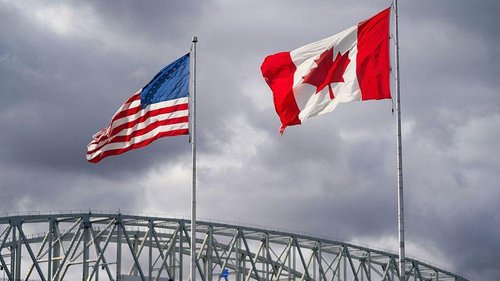
The International Monetary Fund (IMF) has significantly downgraded its global growth forecasts due to the economic uncertainty caused by increasing trade tariffs. The United States is expected to see a growth rate of only 1.8% this year, down from 2.7% projected in January, marking it as the largest downgrade among advanced economies. Factors such as rising tariffs and concerns over consumer spending contribute to this adjusted forecast.The UK is also feeling the squeeze, with its growth forecast cut to 1.1% for the year, despite predictions of outperforming economic growth compared to Germany, France, and Italy. However, the UK is set to face the highest inflation rate among advanced economies at 3.1%, driven by higher costs in sectors like energy and water.IMF Chief Economist Pierre-Olivier Gourinchas remarked that the global economy is still recovering from "severe shocks" over the past four years and faces new tests. The ongoing trade war, especially between the US and China, has added to the uncertainty, prompting many businesses to hold off investments or purchasing decisions — a reaction that fuels further economic slowdowns.The IMF anticipates global growth this year will be 2.8%, a decrease from the earlier 3.3% estimate. Concerns about a possible recession in the US are rising, with the IMF now suggesting a 40% chance of one happening this year. Other countries are also affected, with Canada’s growth forecast slipping to 1.4% and Mexico predictably facing contraction.Despite the challenges, UK Chancellor Rachel Reeves highlighted that the UK remains the fastest-growing European G7 country. However, the revised forecasts have raised alarm among some politicians regarding economic policies moving forward.The IMF acknowledges the inherent unpredictability of such forecasts and notes that various scenarios could unfold due to ongoing trade negotiations and tariff impacts.