The US government has identified several Chinese tech firms, including the renowned gaming and social media company Tencent, as well as battery manufacturer CATL, on a list of entities believed to collaborate with the Chinese military. This list serves as a cautionary message to US corporations and institutions about potential risks when engaging with Chinese companies. While being listed doesn't immediately result in a ban, it increases the possibility of sanctions by the US Treasury Department.
In light of the announcement, Tencent, noted for its popular messaging platform WeChat, insisted that being named was "clearly a mistake." The company assertively stated, "We are not a military company or supplier," emphasizing that this list won't adversely affect its business operations. On the other hand, CATL has also refuted claims of military involvement, labeling the designation as erroneous.
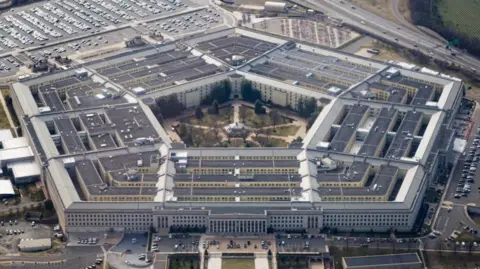
The US Department of Defense's Section 1260H list has now expanded to include a total of 134 entities that it suspects of facilitating China's military advancements through technology sharing. The move has prompted sharp criticism from Beijing, which argues that these measures are an unreasonable attack on Chinese businesses. A spokesperson from the Chinese embassy in Washington expressed concerns that the US's actions violate established market rules and could deter foreign investments in America.
The Pentagon faced pressure from US lawmakers to refine the list, coinciding with Ford announcing a significant $2 billion investment in a Michigan-based battery facility, through which it plans to obtain technology from CATL. Notably, tensions have risen between the US and China as relations between the two largest economies wane, especially with former President Donald Trump set to return to the White House.
This isn't the first time the Pentagon has found itself in legal disputes over this list, as drone manufacturer DJI and lidar company Hesai Technologies have previously filed lawsuits due to their inclusion. Despite their legal actions, both companies remain listed among those cited for military connections.
In light of the announcement, Tencent, noted for its popular messaging platform WeChat, insisted that being named was "clearly a mistake." The company assertively stated, "We are not a military company or supplier," emphasizing that this list won't adversely affect its business operations. On the other hand, CATL has also refuted claims of military involvement, labeling the designation as erroneous.
The US Department of Defense's Section 1260H list has now expanded to include a total of 134 entities that it suspects of facilitating China's military advancements through technology sharing. The move has prompted sharp criticism from Beijing, which argues that these measures are an unreasonable attack on Chinese businesses. A spokesperson from the Chinese embassy in Washington expressed concerns that the US's actions violate established market rules and could deter foreign investments in America.
The Pentagon faced pressure from US lawmakers to refine the list, coinciding with Ford announcing a significant $2 billion investment in a Michigan-based battery facility, through which it plans to obtain technology from CATL. Notably, tensions have risen between the US and China as relations between the two largest economies wane, especially with former President Donald Trump set to return to the White House.
This isn't the first time the Pentagon has found itself in legal disputes over this list, as drone manufacturer DJI and lidar company Hesai Technologies have previously filed lawsuits due to their inclusion. Despite their legal actions, both companies remain listed among those cited for military connections.