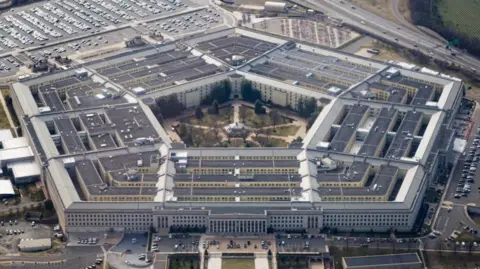
The US will offer more limited support to its allies, according to the Pentagon's new National Defense Strategy. In a significant shift to its security priorities, the US Department of Defense now considers security of the US homeland and Western Hemisphere - not China - as its primary concern.
By comparison, previous versions of the defence strategy - published once every four years - named the multi-domain threat posed by China as the top defence priority for the US. The new strategy reinforces recent comments made by US President Donald Trump, including calls for greater burden-sharing from US allies in countering threats posed by Russia and North Korea.
The new 34-page report follows last year's publication of the US National Security Strategy, which said Europe faced civilisational collapse and did not cast Russia as a threat to the US. At the time, Moscow said the document was largely consistent with its vision.
The strategy calls on American allies to step up, saying partners have been content to let Washington subsidise their defence, although it denies the shift signals a US move towards isolationism. Instead, it says allies, especially Europe, will take the lead against threats that are less severe for us but more so for them.
Relations with China are to be approached through strength, not confrontation. The document states, To the contrary, it means a focused and genuinely strategic approach to the threats our nation faces. The Pentagon emphasizes its intention to guarantee military access to critical regions and prioritize American interests without conflating them with global interests.
By comparison, previous versions of the defence strategy - published once every four years - named the multi-domain threat posed by China as the top defence priority for the US. The new strategy reinforces recent comments made by US President Donald Trump, including calls for greater burden-sharing from US allies in countering threats posed by Russia and North Korea.
The new 34-page report follows last year's publication of the US National Security Strategy, which said Europe faced civilisational collapse and did not cast Russia as a threat to the US. At the time, Moscow said the document was largely consistent with its vision.
The strategy calls on American allies to step up, saying partners have been content to let Washington subsidise their defence, although it denies the shift signals a US move towards isolationism. Instead, it says allies, especially Europe, will take the lead against threats that are less severe for us but more so for them.
Relations with China are to be approached through strength, not confrontation. The document states, To the contrary, it means a focused and genuinely strategic approach to the threats our nation faces. The Pentagon emphasizes its intention to guarantee military access to critical regions and prioritize American interests without conflating them with global interests.