In brief
Philippine President Ferdinand Marcos has declared a national energy emergency due to the impact of the Iran war on fuel prices. The government plans to acquire one million barrels of oil to address shortages, as local petrol and diesel prices have surged. Marcos emphasized the need for steady oil supply and announced measures to stabilize fuel distribution, while transport workers prepare strikes in response to rising costs. The emergency declaration allows the government to take various actions to protect the economy amid an energy crisis.
Philippine President Ferdinand Marcos says he is working to secure new sources of oil after he placed the country under a state of national energy emergency in response to the war in Iran.
Marcos told Filipinos in a televised address that the government would procure one million barrels of oil to add to the current stock, which is good for 45 days.
We will have a flow of oil. Not just one delivery, not two deliveries, but a flow of oil-related products, he said.
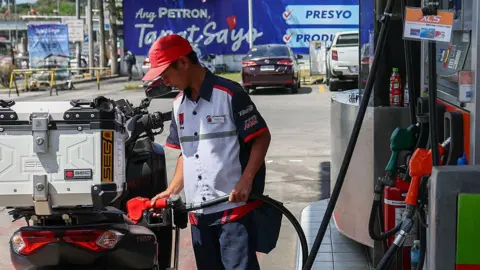
The Philippines, which imports 98% of its oil from the Gulf, became the first country to declare an energy emergency after local diesel and petrol prices more than doubled since the war broke out on February 28.
The US-Israel war with Iran and the effective closure of the Strait of Hormuz—a key shipping route—have sent shock waves through global energy markets, causing shortages and price rises.
Marcos said the emergency declaration gives the government the legal authority to impose measures to ensure energy stability and protect the broader economy. He stated that all options are on the table to manage the situation.
The Philippines is closely allied with the US, and Ambassador to the US, Jose Manuel Romualdez, mentioned that Manila is negotiating to secure exemptions to import oil from US-sanctioned countries.
A committee has been formed to oversee the orderly distribution of fuel, food, medicines, and other essential goods, while the government is also empowered to directly purchase fuel to bolster supplies. This state of emergency will remain in effect for one year unless revoked by the president.
Calls for the emergency declaration followed increasing hardship faced by families due to soaring oil prices, with the transport union coalition Piston planning strikes to protest rising costs.
Transport workers are demanding higher wages, fare increases, and the scrapping of fuel taxes as they push back against what's seen as an inadequate government response to the crisis.
Tycoon Manuel V. Pangilinan expressed support for the emergency measures, emphasizing the need for government intervention during this challenging time.