In brief
In a recent statement, Larry Fink, the CEO of BlackRock, estimated that if oil prices reach $150 a barrel, a global recession could be imminent. He emphasized that escalating tensions in the Middle East, particularly regarding Iran, could result in prolonged high oil prices, which would have severe implications for the global economy. Fink also discussed investment trends in artificial intelligence, asserting that the recent surge is not a bubble but a necessary evolution for job creation in skilled trades. Amid rising energy costs, he believes it's crucial for countries to diversify their energy sources to ensure economic stability.
Global Recession Possible with Rising Oil Prices
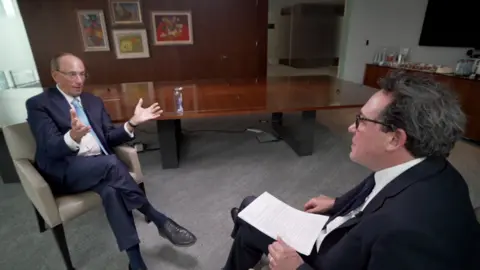
If the price of oil hits $150 a barrel it will trigger a global recession, the boss of US financial giant BlackRock has told the BBC.
Larry Fink, who leads the world's largest asset manager, said that increasing tensions in the Middle East, particularly with Iran, could keep oil prices high, resulting in serious implications for the world economy.
Fink also commented on the investment landscape, denying the existence of an AI bubble but expressing concerns that a focus on university degrees might overlook the need for skills in technical trades.
BlackRock, managing assets worth $14 trillion, has a unique insight into the global economy. Fink’s perspective is informed by ongoing conflicts affecting financial markets, primarily driven by energy costs.
He discussed two potential scenarios: one where the conflict resolves and oil prices stabilize, and another where prolonged tensions lead to sustained high oil prices and economic downturns.
“If the conflict persists, we might see years of prices above $100, closer to $150, which would push the economy into recession,” warned Fink.
Given the current energy market instability, some analysts are calling for countries to boost domestic production to combat reliance on imports. Fink himself advocates for a mixed energy strategy, emphasizing the need for cheap energy to support growth and improve living standards.
Additionally, he addresses the prospects of AI, stating that it can create numerous jobs across the trades, countering concerns about diminishing office roles. He also urges society to reassess career paths and the value of vocational skills.
With ongoing financial market turbulence reminiscent of the 2007-08 crisis, Fink believes that current institutions are better equipped to handle such situations.