In brief
Ruth De La Cruz at the Four Sisters Garden in New Town, N.D., passionately connects with her roots as she teaches college students about Hidatsa squash. This educational program highlights the importance of Indigenous knowledge foundations in the face of proposed federal funding cuts. Tribal colleges, such as Nueta Hidatsa Sahnish College, are crucial for not only providing higher education but also preserving cultural traditions. Despite recent funding increases, leaders express concern over the long-term stability of these institutions. As students actively engage in their cultural education, the legacy of their ancestors remains alive.
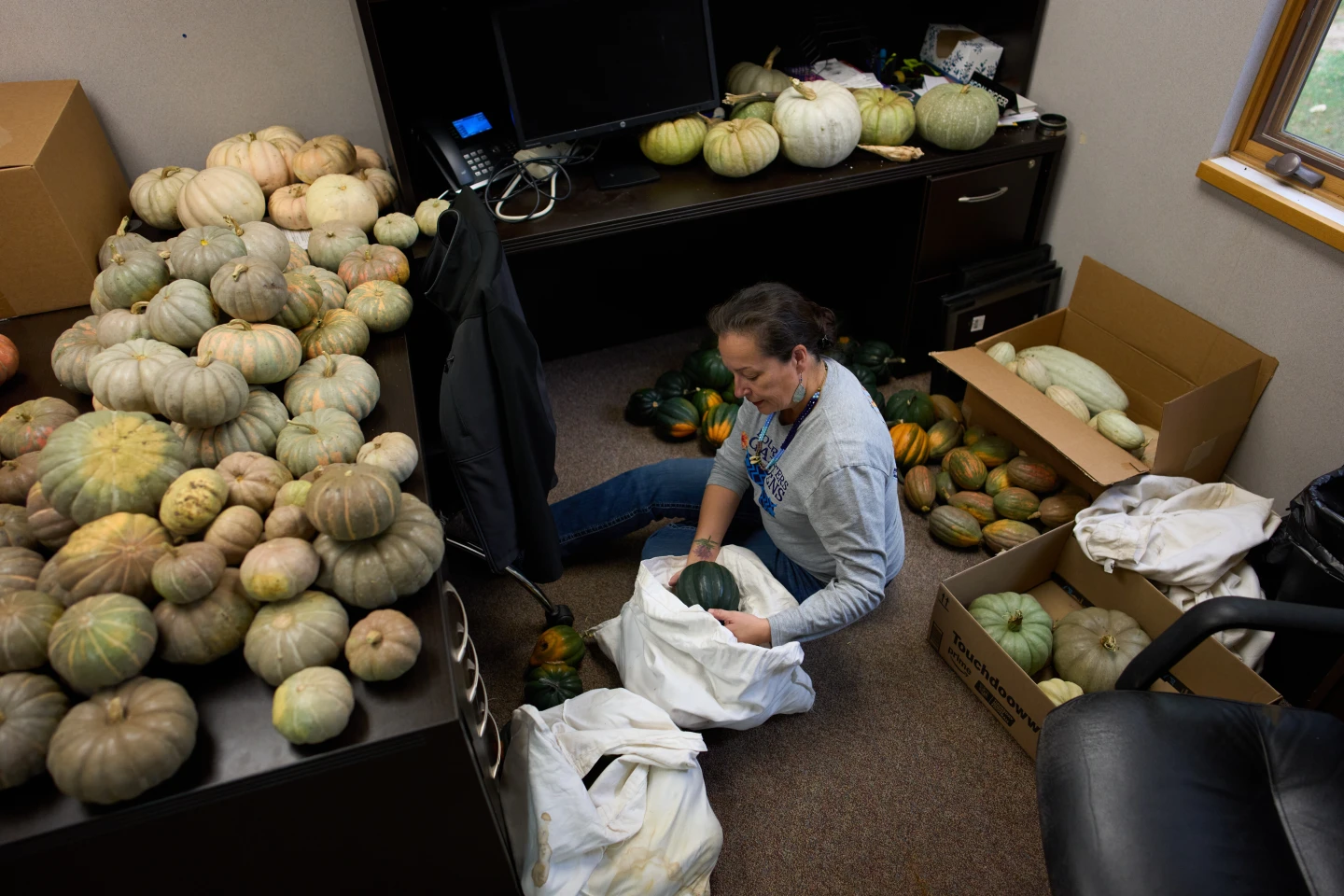
On a crisp fall day, Ruth De La Cruz wanders through the Four Sisters Garden in New Town, N.D., searching for Hidatsa squash—a crop symbolizing her ancestral heritage. To her students, it's an assignment; to her, it's a connection to her forebears' stories. The garden honors the Hidatsa tradition of growing squash, corn, sunflowers, and beans together. De La Cruz is part of a food sovereignty program at Nueta Hidatsa Sahnish College, which represents one of many tribal colleges crucial for Indigenous education. Amid proposed funding cuts by the Trump administration, these institutions face uncertainty as they strive to uphold vital cultural education. Recent increases in federal support for tribal colleges have been met with cautious optimism; however, many leaders, like Twyla Baker, emphasize the need to honor the U.S. government's treaty obligations to Indigenous people.The education pillar of the trust responsibilities manifests in various formats, from language and history classes to traditional practices. Students at TCUs often learn directly from elders, embracing unique cultural knowledge. Despite some funding increases, challenges remain as federal efforts to cut budgets lead to anxiety about the long-term viability of these institution's educational programs. A recent report highlighted the significant economic contributions of TCUs while reaffirming their critical role in preserving Indigenous traditions in the modern landscape.