In brief
Zahra Tabari, a 67-year-old women's rights activist in Iran, faces imminent execution after being sentenced for alleged collaboration with a banned group. UN experts and over 400 prominent women have urged Iranian authorities to halt her execution, citing procedural violations during her trial. The case highlights serious human rights concerns in Iran, particularly regarding the treatment of women and the use of the death penalty in politically charged cases.
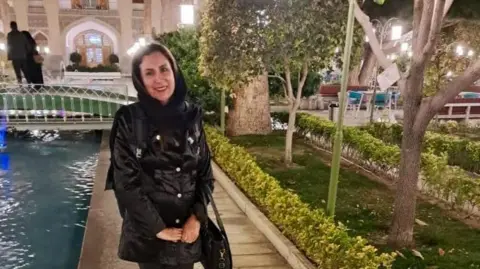
UN experts and 400 prominent women have urged Iran not to execute Zahra Tabari, a 67-year-old electrical engineer and women's rights activist.
Ms. Tabari was arrested in April and accused of collaborating with a banned opposition group, the People's Mujahideen Organisation of Iran (PMOI), according to her family.
In October, she was convicted of 'armed rebellion' by a Revolutionary Court in Rasht after a trial via video link that lasted less than 10 minutes. Her family said the verdict was based on extremely limited and unreliable evidence: a piece of cloth bearing the words 'Woman, Resistance, Freedom', and an unpublished audio message.
At least 51 other people are known to be facing the death penalty in Iran after being convicted of national security offences including armed rebellion, as well as 'enmity against God', 'corruption on Earth', and espionage, according to the UN experts.
The UN Human Rights Council's special rapporteurs warned that Ms. Tabari's case shows a pattern of serious violations of international human rights law. They noted instances including unlawful detention, the denial of legal representation, and unfair trial practices.
More than 400 prominent women, including several Nobel laureates and former world leaders, signed a public appeal for Ms. Tabari's immediate release.
The appeal was organized by Justice for the Victims of the 1988 Massacre in Iran, a UK-based group that represents the families of political prisoners executed in Iran three decades ago. This incident underscores the alarming situation regarding women's rights in the country.
The UN experts highlighted the distressing reality that Iran has become the world's number one executioner of women per capita as they call for justice and an end to the ongoing abuses.