In brief
Geordin Hill-Lewis has been elected as the new leader of South Africa's Democratic Alliance (DA), facing the challenge of broadening the party's appeal beyond its traditional support base. With South Africa's ongoing racial divides, Hill-Lewis plans to focus on gaining the trust of the country's black majority, which represents roughly 80% of the population. His leadership comes amidst a political landscape where the DA has struggled to significantly increase its voter share despite being part of a coalition government. The new leadership team is noted for its diversity, yet Hill-Lewis faces the task of delivering policies that resonate with all South Africans.
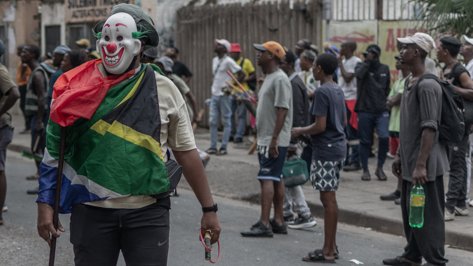
The new leader of South Africa's second-largest party has to solve a problem that none of his three immediate predecessors were able to crack: how to extend the Democratic Alliance's popularity beyond its core support mostly made up of white people and other racial minorities. Despite the advent of the multi-ethnic 'Rainbow Nation' and the end of the racist apartheid system in 1994, South Africa remains fractured on racial lines. For the DA to take charge of the country, Geordin Hill-Lewis, who took over the reins of the party from John Steenhuisen on Sunday, must find a way to bridge the divides and appeal to the country's black majority. Since the 2014 general election, its share of the vote has been stuck at 20% or thereabouts. Hill-Lewis, who at 39 maintains a youthful appearance, has acknowledged this gap, stating that winning the trust of more black people would be a "main focus" of his leadership. He emphasized, 'We have to make it clear to black South Africans that we are genuinely invested in their advancement.' His election, alongside a more diverse leadership team, signals a potential shift in the party's approach to inclusivity. However, Hill-Lewis has not outlined specific policies yet, indicating a focus on government competence and addressing high crime rates as key components to attract a broader voter base.