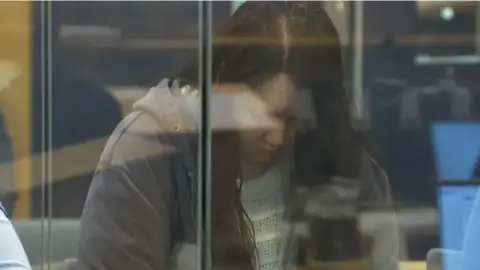
A mother in New Zealand who killed her two children and hid their bodies in suitcases has been sentenced to life in prison. Hakyung Lee, found guilty of the murders of eight-year-old Yuna Jo and six-year-old Minu Jo, will spend at least 17 years behind bars before becoming eligible for parole. The shocking events unfolded shortly after the death of Lee's husband due to cancer in 2017.
During the trial, Lee's defense argued that her mental health deteriorated after her husband died, leading her to believe it was best for her family to die together. Although the judge acknowledged her mental struggles, he deemed her actions as calculated. The children's remains were only discovered in 2022 by a couple who won an auction for the contents of an abandoned storage unit.
Lee's mother expressed deep regret about not seeking help for her daughter and questioned why Lee would take her children's lives if she wanted to die. Meanwhile, Lee's brother revealed that the children's other grandmother remains unaware of their deaths.
Justice Geoffrey Venning noted Lee's likely suffering from prolonged grief and atypical depression, ordering her to be treated as a 'special patient' during her imprisonment. This tragic case serves as a reminder of the profound effects of mental health issues and the far-reaching consequences of family tragedies.
During the trial, Lee's defense argued that her mental health deteriorated after her husband died, leading her to believe it was best for her family to die together. Although the judge acknowledged her mental struggles, he deemed her actions as calculated. The children's remains were only discovered in 2022 by a couple who won an auction for the contents of an abandoned storage unit.
Lee's mother expressed deep regret about not seeking help for her daughter and questioned why Lee would take her children's lives if she wanted to die. Meanwhile, Lee's brother revealed that the children's other grandmother remains unaware of their deaths.
Justice Geoffrey Venning noted Lee's likely suffering from prolonged grief and atypical depression, ordering her to be treated as a 'special patient' during her imprisonment. This tragic case serves as a reminder of the profound effects of mental health issues and the far-reaching consequences of family tragedies.