Spanish Prime Minister Pedro Sanchez has promised to get to the bottom of why two high-speed trains collided in southern Spain, killing at least 40 people as rescuers search the wreckage. After visiting the site of the crash, Sanchez announced three days of national mourning for the victims.
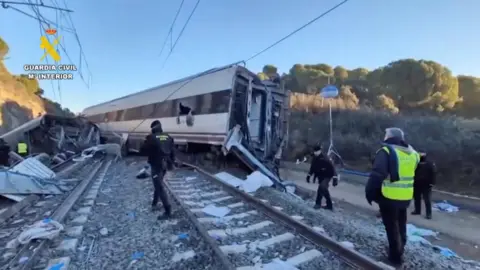
More than 120 people were injured when the carriages on a Madrid-bound train derailed and crossed over to the opposite tracks, colliding with an oncoming train in Adamuz on Sunday evening. This incident is the worst rail disaster in more than a decade in Spain. Rail network operator Adif reported that the crash occurred at 19:45 local time, shortly after one of the trains left Málaga heading north to Madrid. The force of the impact pushed the second train's carriages into an embankment, mainly affecting the front carriages.
Rescue teams faced difficulties recovering people trapped inside the twisted wreckage. PM Sanchez emphasized, This is a day of sorrow for all of Spain, for our entire country, committing to transparency as they investigate the cause of the tragedy. Initial reports suggest a faulty rail joint might have contributed to the disaster. Approximately 400 passengers and staff were onboard both trains. Emergency services treated over 120 individuals, with several still hospitalized, including some in intensive care.
The trains involved were Freccia 1000 models, capable of reaching speeds of 400 km/h (250 mph).
Eyewitness accounts describe the impact as feeling like an earthquake. All high-speed services between Madrid and southern cities have been suspended until further notice.
The crash has prompted an outpouring of condolences from the Spanish monarchy, as well as offers of support from emergency services for those affected.
More than 120 people were injured when the carriages on a Madrid-bound train derailed and crossed over to the opposite tracks, colliding with an oncoming train in Adamuz on Sunday evening. This incident is the worst rail disaster in more than a decade in Spain. Rail network operator Adif reported that the crash occurred at 19:45 local time, shortly after one of the trains left Málaga heading north to Madrid. The force of the impact pushed the second train's carriages into an embankment, mainly affecting the front carriages.
Rescue teams faced difficulties recovering people trapped inside the twisted wreckage. PM Sanchez emphasized, This is a day of sorrow for all of Spain, for our entire country, committing to transparency as they investigate the cause of the tragedy. Initial reports suggest a faulty rail joint might have contributed to the disaster. Approximately 400 passengers and staff were onboard both trains. Emergency services treated over 120 individuals, with several still hospitalized, including some in intensive care.
The trains involved were Freccia 1000 models, capable of reaching speeds of 400 km/h (250 mph).
Eyewitness accounts describe the impact as feeling like an earthquake. All high-speed services between Madrid and southern cities have been suspended until further notice.
The crash has prompted an outpouring of condolences from the Spanish monarchy, as well as offers of support from emergency services for those affected.