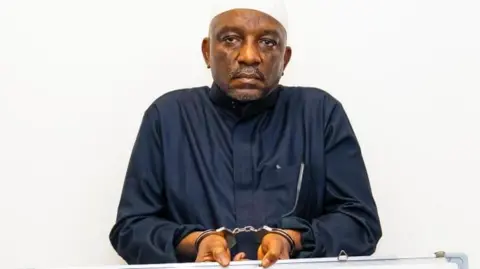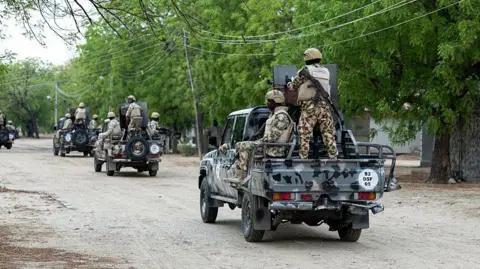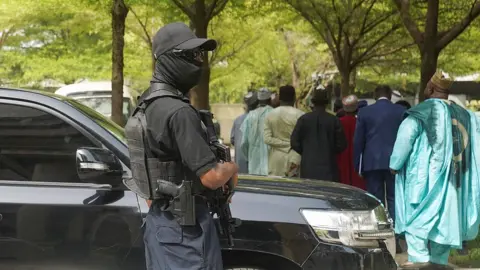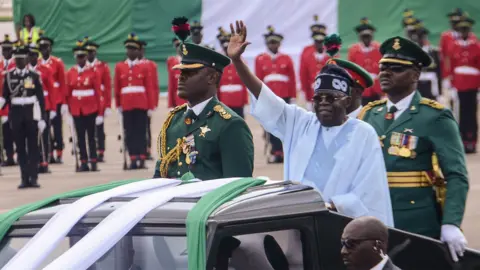
In Nigeria, six individuals have been charged with treason over a coup plot aimed at overthrowing President Bola Tinubu. The group includes a retired major general and a serving police inspector. Their court appearance is scheduled for Wednesday in Abuja.
The charges stem from allegations introduced by the Attorney General earlier this week. Initially, rumors of a coup surfaced in October 2025 when the government abruptly canceled an Independence Day military parade, citing security threats. Speculations about this cancellation quickly pointed towards possible coup conspiracies.
A former governor, Timipre Sylva, was also mentioned in court documents but is currently at large. The charges not only include treason but also extend to terrorism and money laundering allegations. The case has brought to light conversations about Nigeria's political stability, especially regarding the military's role in supporting the civilian leadership.
The specifics of the treason charges indicate a severe commitment to destabilizing state authority, which can lead to lifelong imprisonment under Nigerian law. This case exemplifies the ongoing tensions and challenges facing the nation as it strives to maintain democratic governance since 1999.}
The charges stem from allegations introduced by the Attorney General earlier this week. Initially, rumors of a coup surfaced in October 2025 when the government abruptly canceled an Independence Day military parade, citing security threats. Speculations about this cancellation quickly pointed towards possible coup conspiracies.
A former governor, Timipre Sylva, was also mentioned in court documents but is currently at large. The charges not only include treason but also extend to terrorism and money laundering allegations. The case has brought to light conversations about Nigeria's political stability, especially regarding the military's role in supporting the civilian leadership.
The specifics of the treason charges indicate a severe commitment to destabilizing state authority, which can lead to lifelong imprisonment under Nigerian law. This case exemplifies the ongoing tensions and challenges facing the nation as it strives to maintain democratic governance since 1999.}