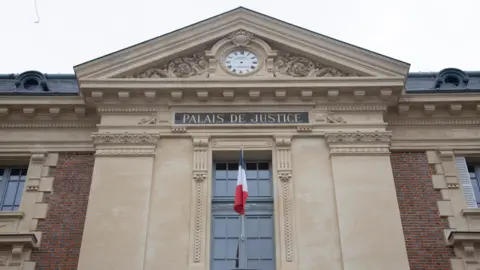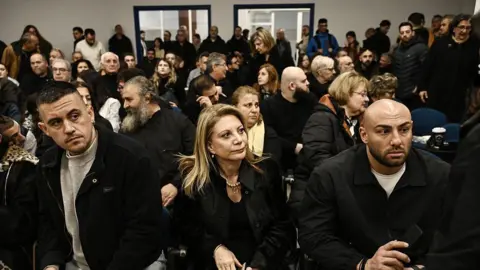
Relatives of the 57 people who died in Greece's worst ever train disaster crowded into a courtroom on Wednesday, demanding justice for the victims.
The trial had already been postponed once because of the chaotic start last week.
Most of the victims of the crash three years ago were students, killed when their intercity service from Athens to Thessaloniki smashed head-on into a goods train on the same line near Tempi in the centre of the country.
Some of the victims are thought to have burnt to death after surviving the initial collision.
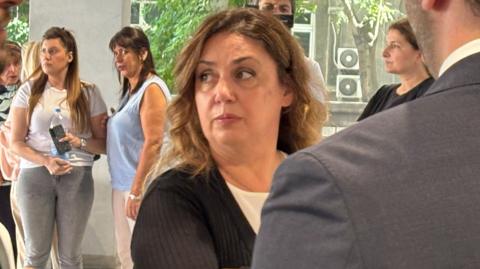
Many relatives were unable to get into the courtroom in the central town of Larisa last week, and the situation was little different when it resumed on Wednesday.
Police officers allowed in only participants who were legally scheduled to attend.
Some relatives complained that two rows of seats had been taken up by police, while others said they still could not witness proceedings clearly enough.
Defence lawyer Zoe Konstantopoulou appealed for the proceedings to be filmed as access for families had been restricted.
The February 2023 disaster is widely known in Greece as the Tempi crime - with many arguing it encapsulates negligence and corruption at the heart of the state.
Thirty-six people are on trial in a case that is expected to hear from 350 witnesses and set to last years.
Among those killed was 20-year-old Anastasia Plakias, a student at the University of Thessaloniki.
She, like so many other victims, was travelling back to lectures in the northern city after spending a public holiday with her family.
In the weeks after the crash, her grieving father Dimitris told the BBC he would always be proud of his daughter who only had love to give.
He said: We relatives call it a state assassination of our children, and all the people who were aboard that train… in which European country could this be possible?
Thirty-three of the defendants face up to life in prison if convicted.
The case is taking place in a remodelled conference hall that cost hundreds of thousands of euros and Mitsotakis has said it is among the most functional and modern in Europe.
The railway network had not made use of EU funding intended to improve safety. The head of the European Public Prosecutor's Office later said the collision could have been avoided if safety improvements had been made earlier.