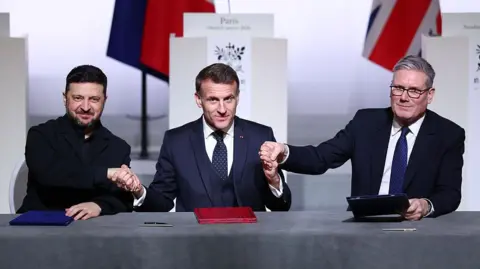
Earlier today, the so-called Coalition of the Willing, largely made up of European leaders, met in Paris with envoys of US President Donald Trump, to try to make further progress on a sustainable peace deal for Ukraine.
With Ukraine's President Volodymyr Zelensky insisting a plan to end the war with Russia is '90% of the way there', no one in that room wanted to jeopardize keeping the Americans onboard.
Yet, there was an immense elephant in that grand Paris meeting—the underlying atmosphere was extremely tense.
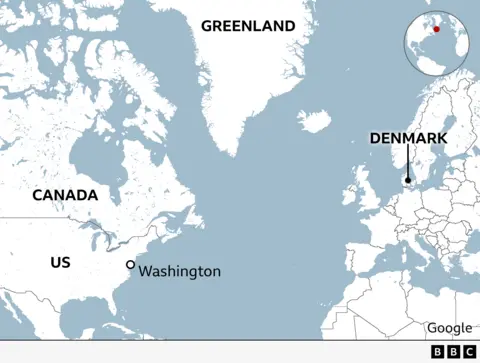
Trump's controversial statements about acquiring Greenland, an autonomous territory of Denmark, have complicated relationships within NATO, leading to fears about the impact on US support for Ukraine.
Greenland lies in the Arctic, strategically significant and significantly vast, prompting US interest not only as a territory but as a military base following the comments on national security.
Mette Frederiksen, Denmark's Prime Minister, faced pressure from her European colleagues during the meeting not to provoke the US, while the leaders issued a statement emphasizing NATO's collective responsibility for Arctic security.
Notably, Europe's leaders wish to keep Greenland's situation separate from the crucial issue of Ukraine. However, political tensions mount from Washington to Copenhagen, complicating diplomatic relations significantly.
Trump's reiterated intentions have drawn criticism and led to unease concerning NATO's unity, as European powers grapple with how to respond effectively while safeguarding their political solidarity.
This dilemma raises the question of how far Europe would go to protect a fellow NATO member's sovereignty, especially given the current geopolitical climate.