In brief
Researchers at UC Irvine have developed a novel mosquito control method by turning male mosquitoes deaf, hindering their mating abilities and potentially reducing the spread of diseases like dengue. By disrupting their sound detection through genetic alterations, they aim to limit mosquito populations without harming the ecosystem.
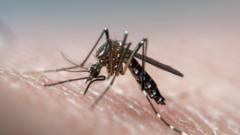
In a groundbreaking study, scientists are unveiling a novel approach to counteract mosquito-spread diseases like dengue and Zika: making male mosquitoes deaf! Traditional mating relies heavily on sound, as male mosquitoes chase females by listening to their wingbeats. However, researchers from the University of California, Irvine took a unique route—they genetically modified male mosquitoes, specifically targeting a protein crucial for hearing. Their experiments on Aedes aegypti mosquitoes, responsible for infecting around 400 million people yearly, demonstrated that mutated males couldn't detect the alluring sounds of potential mates, even after three days together. In contrast, wild males mated efficiently and fertilized nearly all females present in their enclosure. Experts, like Dr. Joerg Albert, recognize the significance of this research. Although some strategies like releasing sterile males are already being explored, this tactic addresses the fundamental role of sound in male mosquito reproduction. By limiting their ability to hear, the chances of female mosquitoes breeding—and consequently spreading diseases—are greatly diminished while maintaining the ecological balance. This promising method opens new avenues for mosquito control and public health.