In brief
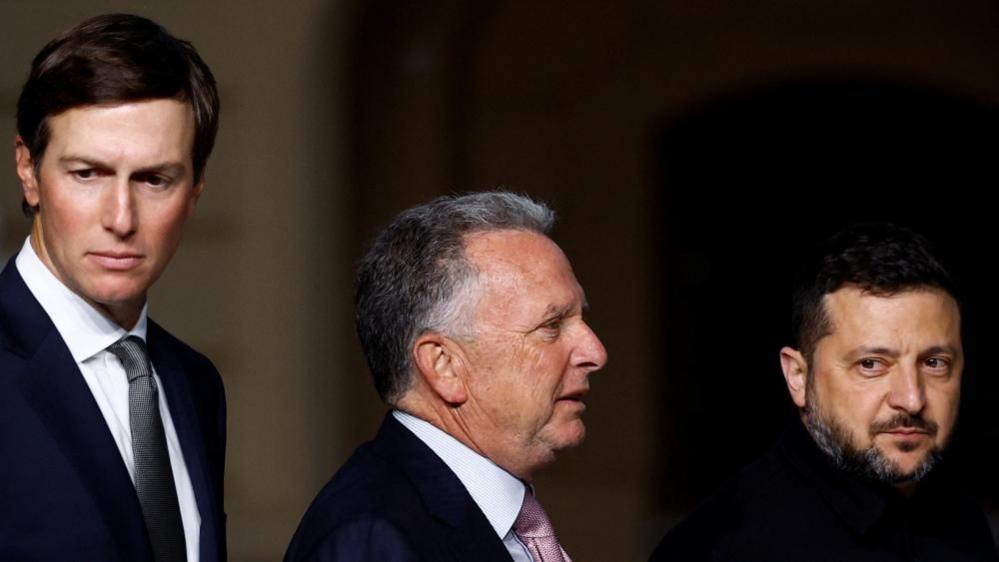
In Kyiv, the meeting between Ukrainian President Volodymyr Zelensky, U.S. envoys Steve Witkoff and Jared Kushner and a delegation of European security advisers was a colourful display of symbolism, from train‑ridden envoys to the historic Saint Sophia Cathedral. Yet, behind the bowing gestures, dialogue revealed stark differences: the U.S. heard reports of Russian battlefield gains, while Kyiv claimed advances and a high casualty rate for Moscow. Despite calls for a settlement, Zelensky insists on strong security guarantees and refuses to cede Donbas territory. With a short pause in air‑strikes, hope for a winter‑time truce remains fragile.
The rendezvous in Kyiv was a parade of symbolism. Steve Witkoff, Jared Kushner and other U.S. envoys landed on Ukrainian soil – literally by train – the first time since Russia’s full‑scale invasion. Their arrival, a throwback to a safer past, set the tone at Saint Sophia Cathedral – a historic relic that sits just yards from where Ukrainian security forces were hit by drones earlier this week.
The talks lasted several hours, later joined by European national security advisers such as the UK’s Jonathan Powell. The conversation was warm and hopeful, with all parties vowing to resume “trilateral talks” involving the U.S. and Europe.
Beneath the polite exchange lived stark disagreements. U.S. envoys arrived with reports of Russian advances, while Ukraine insisted it had gained more territory and that Russia suffered 42,000 casualties. Putin’s message to the U.S. came with a long‑shored call for Ukraine to surrender territory, abandon NATO aspirations and shrink its forces.
Zelensky reiterated that Ukraine needs “strong and clear” security guarantees and a powerful army – he did not budge on Donbas, calling it a “difficult” issue. The broader picture reflects a clash of narratives: can two sides make compromises when the core demands remain as firm as ever?
In short, while the pause in air‑strikes celebrated by both sides offered a brief respite for Kyiv’s people, the expectation remains that fighting will continue into the winter. A window for settlement may appear next spring, but many analysts are wary, considering the near‑impossible task of aligning Russia’s and Ukraine’s fundamental positions.