In brief
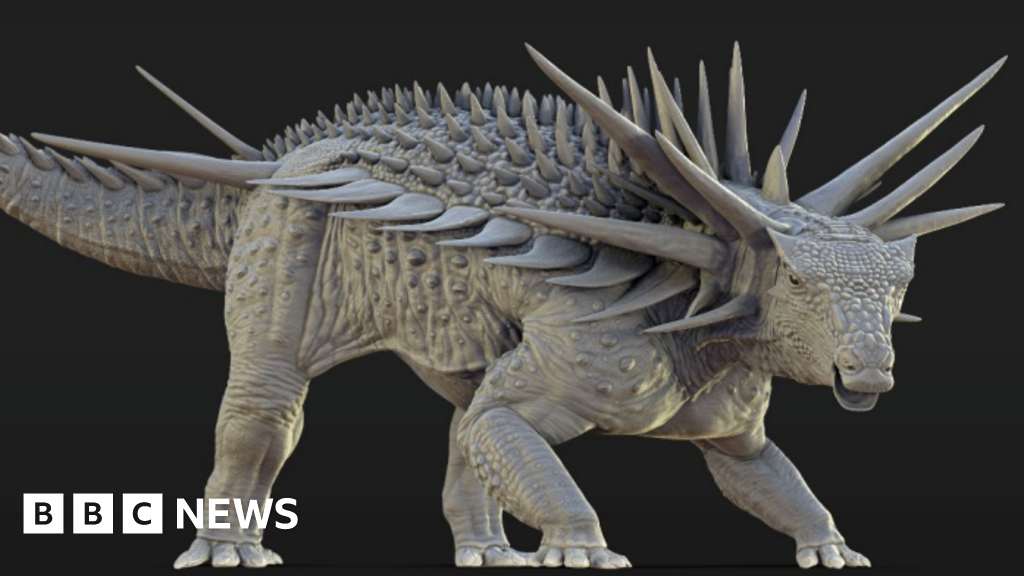
Researchers have unearthed a bizarre dinosaur species, *Spicomellus afer*, with metre-long spikes that challenges existing notions of how ankylosaurs evolved. Dating back 165 million years, this armoured creature showcases an elaborate structure unlike anything seen before, and its discovery may reshape our understanding of these prehistoric giants. Found in Morocco, scientists are excited about the implications of this find as they question how such unique features may have developed and their evolutionary purpose.
Scientists have discovered a bizarre armoured dinosaur which had metre-long spikes sticking out from its neck. The species, called *Spicomellus afer*, lived 165 million years ago, and is the oldest known example of a group of armoured dinosaurs called ankylosaurs. This discovery, made in Morocco, has surprised experts who now have to rethink how these armoured dinosaurs evolved. Prof Richard Butler from the University of Birmingham, who co-led the research, called it the punk rocker of its time, highlighting its unique spikiness.Prof Butler noted that while we typically expect earlier ankylosaurs to have simpler armour, *Spicomellus afer* contradicts this by being covered in strange spikes and a surprising morphology. The spikes were found to be directly fused to the bone, a feature not seen in any known living or extinct species.This creature raises questions about the evolutionary functions of such features—whether they were used for display or defense against large predators like the T. Rex, which emerged later. The findings encourage a reconsideration of how ankylosaurs may have adapted over time, suggesting that their defensive strategies could have been different earlier in the Jurassic period than previously understood. The discovery was made by a local farmer in Morocco and was the first ankylosaur found on the African continent, making it a significant addition to paleontological studies in the region. Prof Butler described it as an exciting milestone in his career, representing the ongoing mysteries of prehistoric life.