In brief
BYD's sales skyrocketed in December, positioning the Chinese giant in a strong rivalry with Tesla, amidst transformative shifts in the global car industry.
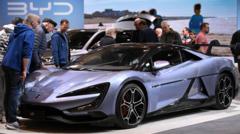
As 2024 gears up, BYD, the prominent Chinese electric vehicle (EV) manufacturer, is making waves with an impressive sales surge, positioning itself neck and neck with Tesla for the title of the world’s leading EV seller. In December alone, BYD sold 207,734 electric cars, pushing its total for the year to a remarkable 1.76 million. This sales jump has been fueled by strategic subsidies and discounts that captivated consumers. This milestone arrives as Tesla is set to reveal its quarterly sales figures, and while Tesla retained a narrow advantage over BYD recently, the Shenzhen-based company is quickly closing the gap. In fact, BYD's total vehicle sales soared over 41% compared to last year, primarily driven by its popular hybrid models. The rise of BYD comes as the Chinese market thrives, where fierce competition has led to lower prices and government incentives, encouraging buyers to switch to more sustainable vehicle options. Currently, 90% of BYD's sales occur within China, outpacing foreign competitors like Volkswagen and Toyota in the region.In contrast, traditional automakers are grappling with significant challenges in Western markets. Honda and Nissan are exploring a merger to keep up with the shifting landscape dictated by Chinese firms. Additionally, Volkswagen recently negotiated with the IG Metall trade union to stave off potential plant closures in Germany.Last quarter, for the first time, BYD's revenues eclipsed those of Tesla, reporting over 200 billion yuan ($28.2 billion) between July and September, a notable 24% increase from the prior year, while Tesla's revenues hit $25.2 billion. Despite this, Tesla still outpaced BYD in total EV sales.While Chinese automakers like BYD aim to expand globally, they've encountered hurdles in key markets. The European Union imposed tariffs of up to 45.3% on imports of Chinese-made EVs, while the U.S. has levied a 100% duty on such imports, with potential increases looming. Recently, BYD faced a setback in Brazil, its largest overseas market, when authorities halted the construction of a factory due to issues surrounding worker treatment. BYD has withdrawn ties with the implicated construction firm and remains committed to adhering to Brazilian laws. As the EV race heats up, all eyes will be on BYD and Tesla in the coming months.