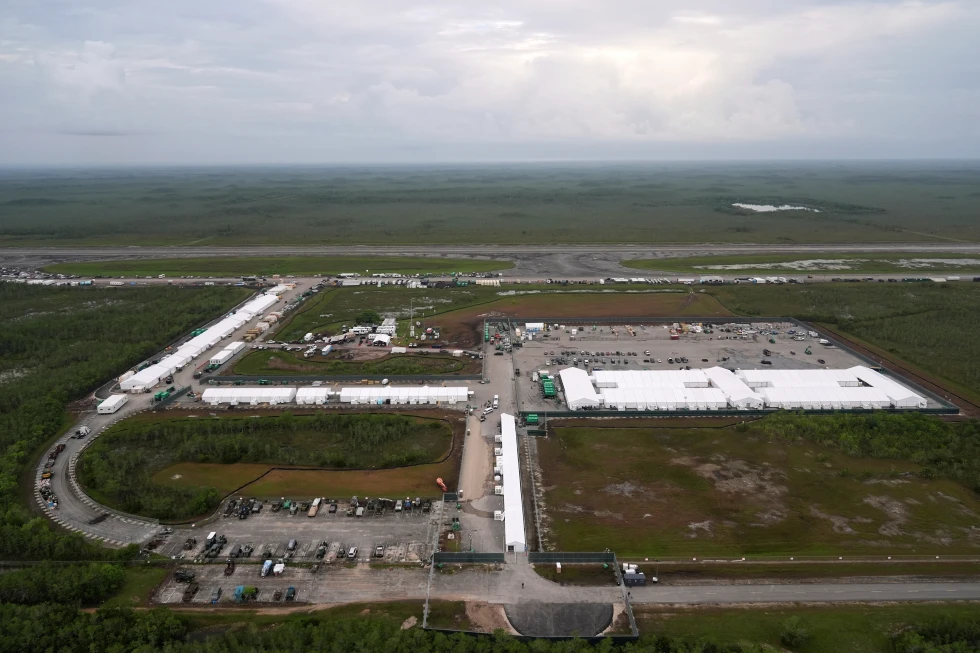
Felipe Hernandez Espinosa, a 34-year-old asylum-seeker, is locked in a cycle of detention at the Fort Bliss Army base in El Paso, Texas. Having already spent 45 days at a notorious immigration holding center in Florida dubbed Alligator Alcatraz, he describes harrowing conditions: 'I came to this country thinking they would help me, and I've been detained for six months without having committed a crime,' he lamented.
Hernandez's situation is not unique. With immigration judges now under pressure due to backlogged courts and shifting policies, prolonged detentions have become alarmingly common. In January alone, over 7,000 individuals had been in custody for six months or more. Many feel the desperation of being trapped, sometimes for years, with little clarity on their cases.
Legal advisors have raised concerns about these increasing instances of indefinite detention. Migrants report being ready to leave but facing bureaucratic hurdles that keep them trapped. Cases of individuals like a Mexican man and a Dominican seeking asylum highlight the emotional toll of uncertainty in these facilities.
Hernandez's wish to return to Nicaragua marks a stark contrast to the hopes that brought him to the U.S. Initially fleeing threats tied to political opposition, he grapples with the trauma of his experiences in detention. In a haunting reflection, he says, 'I'm always thinking about when I'm going to get out.'
The plight of detainees reveals a growing crisis at the intersection of immigration policy and human rights, where the quest for safety becomes an extended ordeal of desperation within the U.S. immigration system.