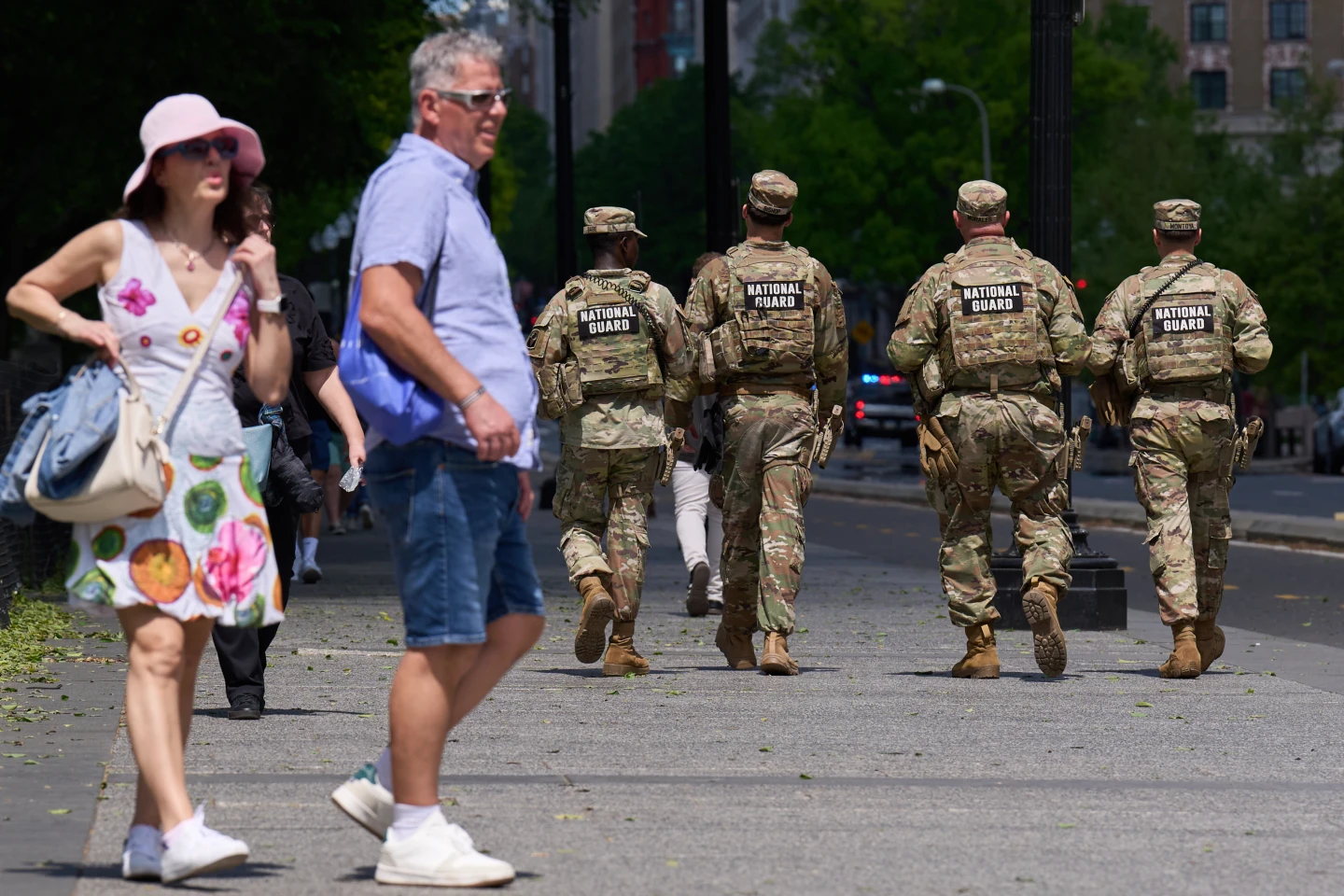
Every spring, Washington's Tidal Basin blossoms bright with cherry trees, attracting over a million visitors annually. However, this year, amid the floral beauty, are troops dressed in camouflage standing guard—an extension of President Trump's crime emergency declaration from eight months ago.
Currently, over 2,500 National Guard members still patrol key areas in the city, echoing an ongoing law enforcement initiative. While other cities have seen court interventions halting military calls during peaceful civic life, Washington D.C. remains a unique case with armed individuals still present in its streets and parks.
City officials, reflecting on the ongoing deployment, express frustration regarding taxpayer costs exceeding one million dollars per day for the guard's presence. As Washingtonians prepare for a contentious election year, it appears that city leadership has largely deserted the topic, prioritizing broader issues such as housing affordability and local governance.
While proponents of military presence argue it helps curb crime, others highlight existing tensions and decreased public sentiment towards armed forces in civilian spaces, especially in a district seeking more autonomy in its governance. As protests are planned for May 1 to contest the military's ongoing presence, questions remain regarding the balance of safety, democracy, and public sentiment in the capital.