In brief
After a tense summit in Oslo, Ukrainian President Volodymyr Zelensky announced that U.S. intelligence sharing is “working now,” following talks with former President Trump’s envoy and Finnish President Alexander Stubb. The meeting rebuked earlier U.S. claims of withholding critical data and signalled progress toward peace proposals that Russia must now respond to. Moscow still controls roughly one‑fifth of Ukrainian territory and drone attacks continue, while the U.S. faces criticism for slowing Starlink support and patrol missile deliveries. The talks set the stage for a fresh wave of diplomatic talks, though how quickly Russia will engage remains uncertain.
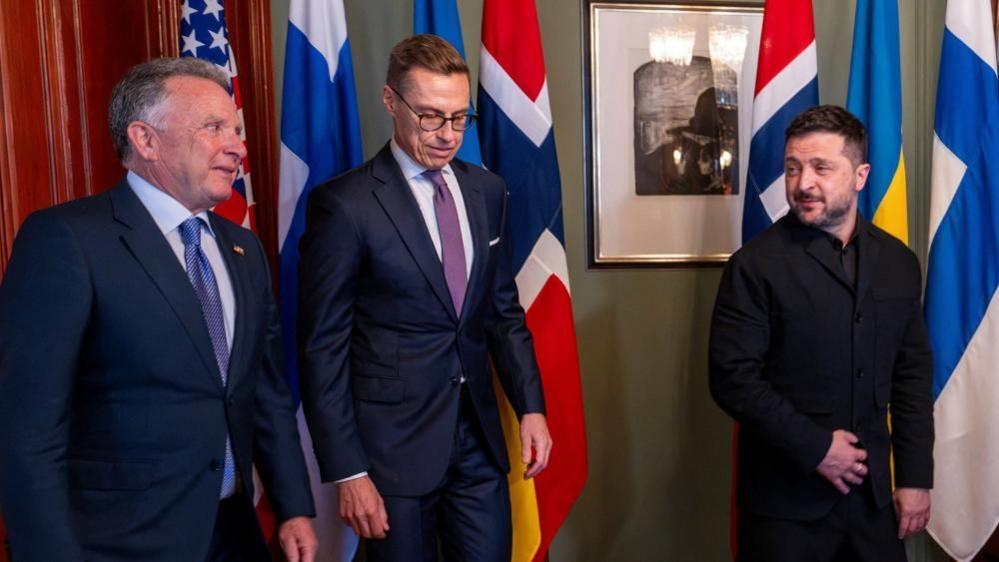
Volodymyr Zelensky told reporters that U.S. intelligence sharing is now working after a meeting with former President Donald Trump’s special envoy, Steve Witkoff, and Finland’s Alexander Stubb in Oslo. The U.S. had earlier been accused by Kyiv of holding back critical intel, a claim Secretary of State Marco Rubio disparaged as “scandalous.”
The three leaders said the talks made “genuine progress” toward peace proposals, though they withheld specifics. Zelensky stressed that war‑time early‑warning and missile‑intercept support were now on track. He also mentioned the need for better Starlink access after recent speed limits on the satellite network were reported.
All sides agreed to keep the dialogue open, but the next step depends on Russia’s reaction to the proposals. Witkoff is due in St Petersburg on Wednesday, and the Kremlin has indicated it will listen—yet it has ruled out any “political concessions.”
The tensions extend beyond the battlefield: Trump has publicly urged Ukraine to “make a deal” and suggested Kyiv should choose a new president. Meanwhile, Russia claims that U.S. sanctions on Russian diesel have been lifted after Moscow supplied large quantities.
Recent drone strikes have highlighted the continued conflict. Ukrainian officials said at least ten people were killed by Russian drones on Tuesday, including four civilians in Kyiv and the capital region, four in the Donetsk area, and two in Dnipro.
European leaders echoed concerns about mixed messages from Washington. Germany’s Chancellor Friedrich Merz warned that resolving the war will require joint effort, while U.S. Vice‑President J.D. Vance noted that while Ukraine remains a partner, they diverge on key issues such as the bombing of Russian energy sites.
The Oslo talks mark a tentative step amid a war that has pushed about 20% of Ukraine’s land under Russian control. Whether the new intelligence flow will change battlefield dynamics or spark a new diplomatic phase remains to be seen.